How Thames Water came to be flooded with debt – and what it means for taxpayers
- Written by: Kate Bayliss, Research Associate, Department of Economics, SOAS, University of London
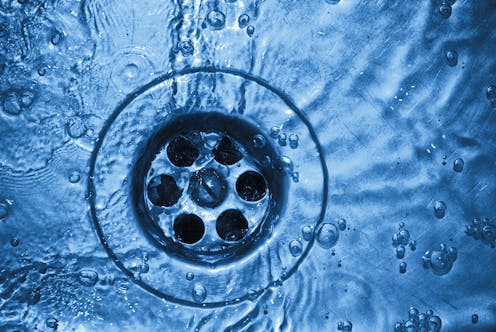
Thames Water is reportedly on the brink of collapse[1]. The UK’s largest water company, well known for its high levels of water leakage[2], sewage spills[3], executive pay[4] and dividend payments[5], now appears to be flooded with debts that it cannot afford to pay.
Those debts have reached more than £14 billion, leading to fears[6] the government – or UK taxpayers to be precise – may have to bail the company out.
The news of Thames Water’s difficulties may have shocked some of its 15 million customers. But as someone who has researched the finances of water companies, I was not entirely surprised. These issues have been a long time in the making, and I raised concerns[7] publicly over five years ago.
When the water and sewage companies of England and Wales were privatised in 1989[8], the intention was to bring fresh finance and innovation to create efficiency. But in the 2000s, a new kind of financial investor began to dominate the sector.
Our recent research[9] found that by 2021, of 15 English water and sewage companies, nine were owned by “special purpose companies”. These are organisations set up for the purpose of buying water utilities, with owners consisting of a range of private equity funds, pension funds and sovereign wealth funds.
These kinds of investors were then able to use water company revenue to generate significant returns to shareholders. And one way this happens is by hiking up company debts.
Newly privatised water companies had started out with zero debt in 1989. Yet by the end of March 2022, total debt in the sector was at £60.6 billion[10]. In part, the increased debt was used to refinance the companies so that investors could repay themselves part of the original cost of buying the water utility.
Our research shows that Thames Water was the archetype of this model. When it was taken over in 2007 by a consortium led by Macquarie, an Australian investment bank, debts increased[11] over the next ten years from £3.2 billion to £10.7 billion. The proportion of assets funded by borrowing increased to over 80%, while the company paid out dividends of £2.5 billion. The company has previously said[12] that it has a “strict, performance-linked dividend policy monitored by Ofwat”.
But such high debts are problematic for a water company. First there is the issue of inequality, where customers’ water bills are used to pay down debts that have increased to pay dividends to its owners. And second, as we see with Thames Water, these highly indebted companies are potentially unstable in the event of cost pressures.
What we have now is a perfect storm in which Thames Water’s finances may collapse. A key pressure is inflation, which is pushing up the value of some of the company’s debt at the same time as it pushes up costs. More than half of Thames Water’s debt is linked to inflation[13], contributing to the uplift in debt value.
Then there is the cost of improving performance. This has become more urgent after Ofwat, the water company regulator, was given new powers[15] (effective from April 2025) to prevent companies paying dividends if these weaken financial resilience or are not linked to performance.
In 2022, the government set out a plan to tackle the rapidly growing issue of sewage discharge in a £56 billion investment plan[16]. All of this adds up to intense pressure on the company’s finances.
If those finances do unravel, it is likely that the company will be underwritten by the government to keep the taps flowing while a rescue package is put together (as happened[17] with the energy company Bulb).
However, this situation also creates the opportunity for a new public model of water supply, one that treats water not as a private commodity but as part of the wider ecosystem, providing social equity as well as environmental sustainability.
Public ownership need not be a step back to the 1970s. In fact, it would bring the UK into step with most of the modern world, including most of Europe[18]. In Paris, where water provision was made public in 2009 after years of outsourcing, the change is widely considered a success story[19].
The last 34 years have revealed the fundamental problems with the current system. This crisis is a chance to direct England’s water in a new direction.
References
- ^ brink of collapse (www.bbc.co.uk)
- ^ water leakage (www.theguardian.com)
- ^ sewage spills (www.theguardian.com)
- ^ executive pay (www.oxfordmail.co.uk)
- ^ dividend payments (www.ft.com)
- ^ leading to fears (www.independent.co.uk)
- ^ raised concerns (www.ft.com)
- ^ privatised in 1989 (www.ofwat.gov.uk)
- ^ recent research (www.tandfonline.com)
- ^ at £60.6 billion (www.ofwat.gov.uk)
- ^ debts increased (www.tandfonline.com)
- ^ previously said (www.ft.com)
- ^ linked to inflation (www.bbc.co.uk)
- ^ Andrey_Popov/Shutterstock (www.shutterstock.com)
- ^ given new powers (www.ofwat.gov.uk)
- ^ £56 billion investment plan (assets.publishing.service.gov.uk)
- ^ as happened (www.gov.uk)
- ^ most of Europe (iopscience.iop.org)
- ^ a success story (research.ncl.ac.uk)