how a simple game of letters became part of the New York Times' business plan
- Written by: Mark Brill, Senior Lecturer in Future Media and Creativity, Birmingham City University
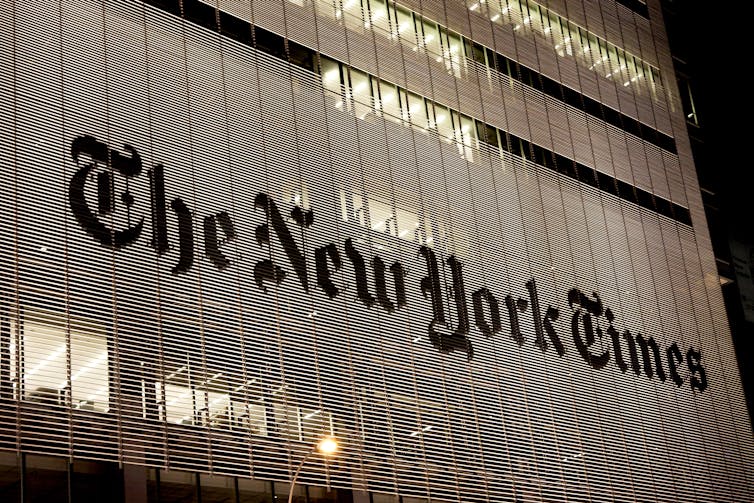
In just a few months, a simple five-letter puzzle has earned its creator a seven-figure sum[1]. The growth of Wordle[2], in which players attempt to work out a mystery word, has been rapid.
At the start of November 2021, the online game was played by just 90 people. By the start of 2022, that number was 300,000[3], increasing to 2 million soon after. It has reached a level of popularity that made the New York Times value it at over US$1 million[4] (£738,000).
Part of the game’s value to users – and therefore to the publishers of the New York Times – is its simplicity. It is quick to play, easy to understand and provides a few moments of stimulating distraction.
For anyone yet to try it, it involves six chances to work out a mystery five-letter word. After each guess, the colour of the letter squares changes to show how close the attempt was to the mystery word.
It is designed to be played just once a day, with the same word for all players, anywhere in the world. This creates both scarcity and community simultaneously, meaning users are attracted by a shared sense of achievement and don’t feel they are addicted or wasting time.
Many of my students begin their day with a quick Wordle. Asked to explain the appeal, one replied: “It wakes my brain up, and is much better than going on social media or reading the news.” Another told me: “It kick starts my day.”
This mental equivalent of a healthy breakfast has become iconic in a short space of time. A pizza brand[5] and a rock band[6] have both used the game’s now familiar grid as part of their marketing material.
And marketing is essentially what the New York Times is doing by taking ownership of Wordle from its inventor, Josh Wardle. The newspaper is interested not in the game’s letters, but its numbers – using the Wordle’s popularity to increase the size of the Times’ online audience. This is what digital platforms refer to as “reach”.
Wordle is especially useful in terms of reach because of the way fans share their successes and failures through social media. This vital development was incorporated in December 2021 after a player in New Zealand[7] used a grid of coloured emoji squares to show her daily progress without giving away the answer.
The sharing amplifies the user’s sense of achievement, at the same time as creating a sense of belonging among the Wordle community – now a powerful force in retaining the authenticity of the game – and making more people aware of Wordle’s existence.
Facebook (now Meta) understood the potential[8] of gaining large audiences through multi-billion-dollar purchases of popular social media platforms like Instagram and WhatsApp. And a similar thing has been done by the New York Times.
Owning Wordle gives it an opportunity to get millions of people, many of whom form part of their target demographic, to visit their site (which will host the game) every day. The expectation (hope) is that a sizeable proportion will decide to become New York Times subscribers.
Achieving a similar reach through traditional paid advertising would cost the New York Times considerably more than the purchase price of Wordle. The publishers aim to have 10 million subscriptions by 2025[9], so buying a popular game to help in this quest makes good commercial sense.
There are other commercial opportunities too. Although the New York Times said[10], it intends to keep the game free “initially”, they appear to be keeping their options open for future revenue channels.
It is an understandable position given that the online casual gaming industry was valued at US$93.2 billion in 2021[11]. Wordle, with its short game time, fits into the fastest area of growth, known as “hypercasual”, which is usually funded by lucrative advertising[12] deals. In that context, given its popularity, Wordle can be considered a significant asset.
Other options for monetising online games include making people pay to play (premium), operating a basic free version with an upgrade (freemium), or bringing advertising and product sales into the equation.
A decade ago, Farmville (the farm-based simulation social game) was the most popular online game. It used a freemium model to generate revenues worth hundreds of millions of dollars[14], with the largest of those coming from the sale of digital products – paid add-ons to the game itself. That made sense for a game designed to be played many times a day, but for Wordle’s short duration format, there seems to be little scope for digital products.
Physical products may be an option, such as a board game, or perhaps merchandise, but there are only so many Wordle mugs that can be sold. Creating a premium version is also tricky with such a straightforward and accessible format.
It would mean building a paid-for app and convincing players to download it, potentially losing many users along the way. In-game advertising is another less drastic option, but that could prove tricky to implement without the ads getting in the way of the currently clean user experience, again a key element of the game’s simplicity and broad appeal. The most obvious revenue provider would be to put the game inside the New York Times paywall, currently priced at US$25 per quarter for digital-only, and hope they can bring over plenty of users.
However, any of these options are challenging. As is the case with many online games, Wordle has a loyal and active user base who expect it to remain quick, simple and free. There is considerable risk that attempts to monetise Wordle beyond its capacity to get eyes on the New York Times could simply alienate users and drive them elsewhere.
References
- ^ seven-figure sum (www.bbc.co.uk)
- ^ Wordle (www.theguardian.com)
- ^ was 300,000 (www.theguardian.com)
- ^ over US$1 million (www.forbes.com)
- ^ pizza brand (twitter.com)
- ^ rock band (twitter.com)
- ^ player in New Zealand (www.theverge.com)
- ^ understood the potential (www.bbc.co.uk)
- ^ 10 million subscriptions by 2025 (www.bloomberg.com)
- ^ New York Times said (www.nytimes.com)
- ^ US$93.2 billion in 2021 (newzoo.com)
- ^ lucrative advertising (www.deconstructoroffun.com)
- ^ Shutterstock/Osugi (www.shutterstock.com)
- ^ hundreds of millions of dollars (venturebeat.com)