The Itinerary That Looks Fine on Screen but Breaks at the Airport
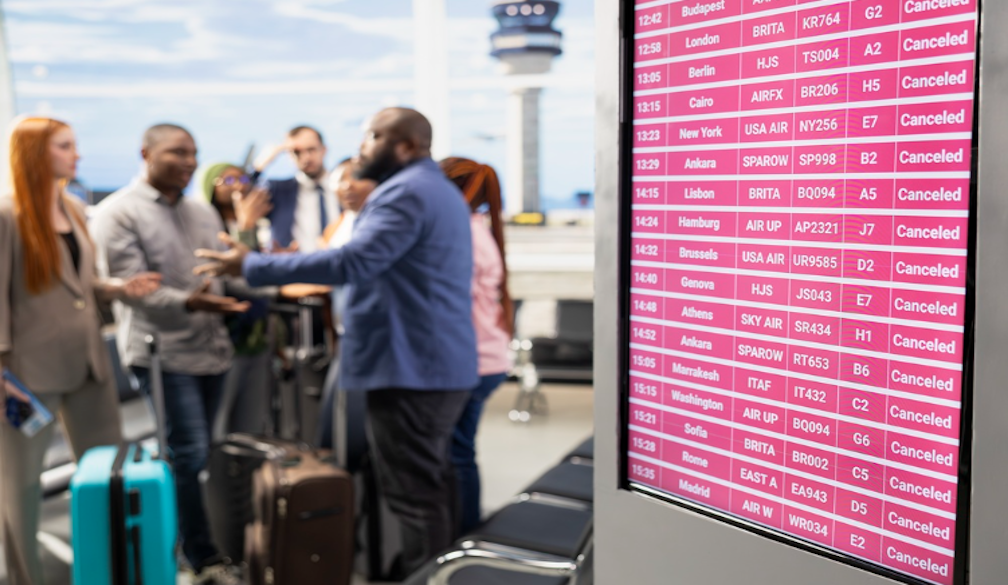
A trip can look perfect when you book it and still fall apart at the airport — often because the connection was never really possible. Here is why that happens, and what lowers the risk.
The bad trip that started with a perfect-looking booking
Some of the worst travel days begin with a booking that looked completely fine. Two flights, a tidy connection in the middle, a screen that said the timing worked. It is only at the airport, watching the second plane's doors close while you are still in a security line, that it becomes clear the connection was never realistic in the first place.
A major reason, according to a report from OAG, a company that tracks aviation data, is bad connection-time data. Every large airport has what the industry calls a minimum connection time — the shortest gap in which a normal traveler can actually get off one plane, cross the terminal, clear any security or passport control, and reach the next gate. Get that number right and a connection is safe. Get it wrong, and a booking system will happily sell a connection that no human could physically make.
Fifteen wrong minutes can cost you the whole connection
The trouble is that the "right" number is surprisingly hard to pin down, and the public sources many tools rely on are often out of date. OAG gives a sharp example: at Frankfurt, the real minimum connection time for many transfers is now 60 minutes, yet public sources that AI tools routinely copy — including widely scraped reference pages — still list it as 45. A system trusting the old figure will confidently offer a 45-minute connection that, in practice, is almost guaranteed to be missed.
Fifteen minutes sounds trivial. In an airport it is the difference between making your flight and watching it leave. And the damage rarely stops at the missed segment. A blown connection cascades: a rebooking onto a later flight, hours in a terminal, sometimes an overnight hotel, sometimes a knock-on missed event at the other end. For the airline and the traveler alike, a fifteen-minute data error can turn into a ruined day and real money — all from a number that was wrong before anyone left home.
Airpaz aims to offer only connections that actually work
Getting these unglamorous details right is exactly the kind of work Airpaz's Chief Technology Officer, Leonard Liu, says matters far more than it looks.
"A connection that cannot actually be made should never be shown as if it can — that is the whole point," he says. "So we care a great deal about using accurate, current schedule and connection information, rather than whatever a quick public source happens to say today. When we bring together flights from more than 450 airlines, the goal is not only to show you a route that exists on paper, but one that will hold together on the day you actually fly it."
He keeps the promise narrow and honest.
"I cannot promise you a flight will never be delayed — nobody controls the weather or a slow security line," he says. "What we can control is not handing you a plan that was impossible from the very start. That is a data problem, and a data problem is something we can actually do something about."
No data can promise a delay will never happen
The honest limit is that even a perfectly built itinerary can come apart on the day. Weather, a late-arriving aircraft, an unusually long queue — these happen, and no booking site can promise they will not. A traveler who leaves a little extra buffer on an important connection, rather than booking the tightest legal gap, is always making a wise choice.
What accurate data can remove is the avoidable version of the problem: the connection that never made sense in the first place. There is a real and important difference between a trip undone by genuine bad luck and one undone because the timing was wrong before it was ever sold. The first is life; the second is a data failure. Closing that second gap — quietly, in the background, before you ever see the option — is where good data does its most important work.


 Blackhawk Network VP Head of ANZ Kieran Nolan