Will Rachael Reeves’ youth unemployment scheme force her to bend her own rules?
- Written by: Maha Rafi Atal, Adam Smith Senior Lecturer in Political Economy, School of Social and Political Sciences, University of Glasgow

UK chancellor Rachel Reeves has set out a “youth guarantee” aimed at ending long-term unemployment among young people. Under the plan, a young person who has been out of work for 18 months would be offered a temporary job, apprenticeship or college place.
The UK has just under a million young people who are not in employment, education or training (Neet)[1] – thought to be around 13%[2] of the country’s 16- to 24-year-olds.
Under Reeves’ plans[3], those who refuse the offer could face benefit sanctions. The scheme is being positioned as a way to boost growth while keeping to Labour’s fiscal rules ahead of November’s budget.
The idea has some logic. Long-term youth unemployment has consequences that reach far beyond the individual. Research[4] from the Organisation for Economic Co-operation and Development (OECD) and the Institute for Fiscal Studies[5] shows that young people who are out of work for extended periods often face lower earnings for decades afterwards, as well as poorer health and social outcomes.
Economists sometimes describe this as “scarring”[6] – that is, lasting negative economic effects. By contrast, job losses that come mid-career tend to have less lasting economic impact because these workers have more experience or skills that they can use to get their next job.
So the argument that tackling youth unemployment offers particularly high returns is, in theory, credible.
The difficulty is whether the guarantee, as outlined by Reeves, can deliver anything more than temporary relief. It is not yet clear where the promised jobs will come from.
If the government pays firms to create placements, they will have been specially created for the scheme, rather than representing real gaps that the firms need to fill to grow their business. When the government subsidy ends, the firms may have no reason to keep the young person on. And a short placement may not provide enough skills development to allow the young person to get a job elsewhere.
What’s more, the government is not proposing to pay the full cost of these placements. If the onus falls on businesses to absorb additional young workers in newly created roles at their own expense, the effect may be negligible. This is because Labour’s wider programme – from higher employer national insurance[7] contributions to new employment rights[8] – already imposes extra costs on employers.
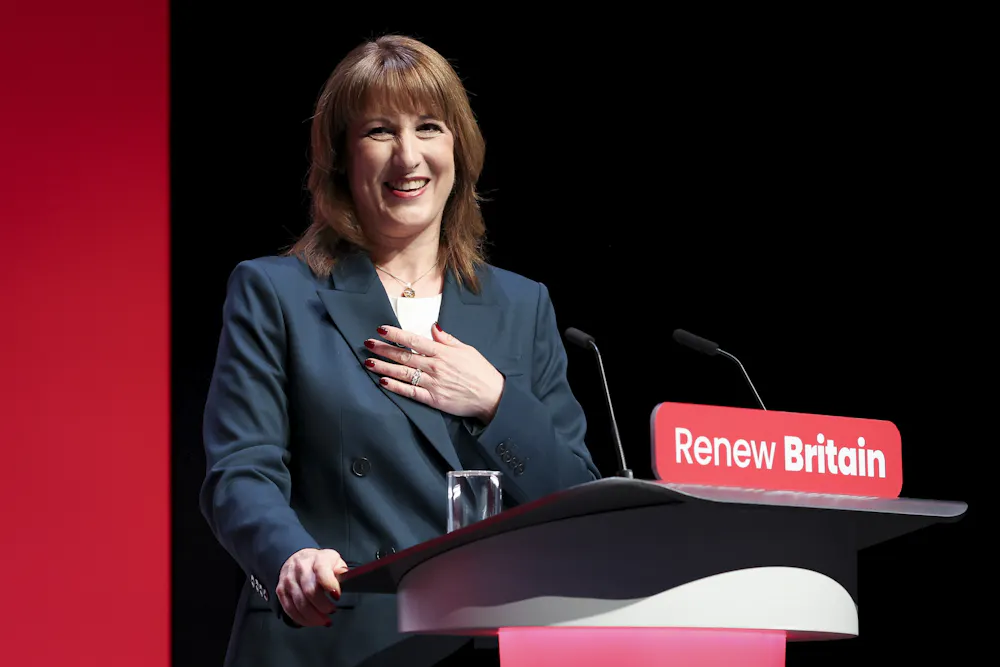
That tension points to a broader issue in Reeves’ strategy. She has pledged not to increase headline tax rates[10]. Instead she is seeking to expand the overall tax base by growing employment and productivity.
Yet that kind of growth usually requires sustained public investment in skills, infrastructure and industrial policy. A scheme that subsidises wages for 12 months may help individuals back into work, but it is unlikely to shift the productivity dial or generate lasting fiscal dividends without a wide programme of investment.
For Reeves, the challenge is that the guarantee must be large enough to create real career pathways and business growth. But to do so requires precisely the kind of government expenditure that is made difficult by her own “non-negotiable”[11] fiscal rules.
Instead of a way to grow within the rules then, the youth guarantee may be added to the list of promises the government cannot fulfil without bending them.
References
- ^ (Neet) (theconversation.com)
- ^ around 13% (feweek.co.uk)
- ^ Reeves’ plans (www.gov.uk)
- ^ Research (www.oecd.org)
- ^ Institute for Fiscal Studies (ifs.org.uk)
- ^ “scarring” (www.sole-jole.org)
- ^ employer national insurance (theconversation.com)
- ^ new employment rights (theconversation.com)
- ^ EPA/ADAM VAUGHAN (epaimages.com)
- ^ headline tax rates (theconversation.com)
- ^ “non-negotiable” (www.moneymarketing.co.uk)