Billionaires bankroll US politics, but voters could demand a fairer system
- Written by: João V. Ferreira, Lecturer in Economics, University of Southampton
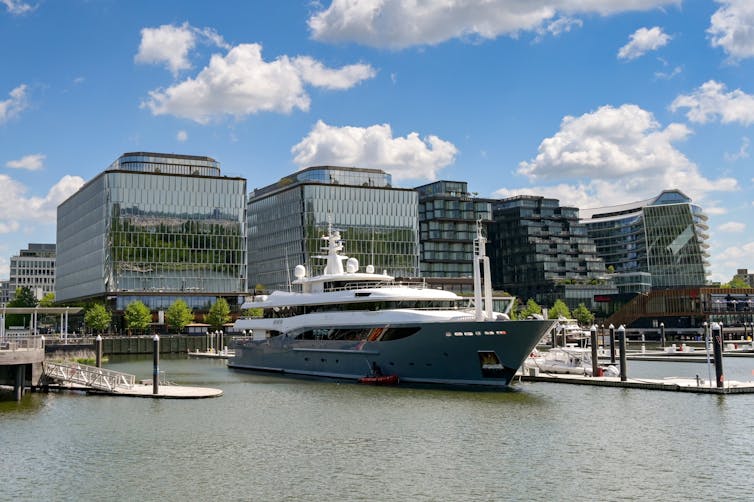
Billionaires played an unprecedented role in the 2024 US elections, with 150 of the world’s wealthiest families contributing nearly US$2 billion (£1.57 billion)[1] trying to influence the outcome. This included donations from the likes of Elon Musk (US$133 million for the Republicans) and Michael Bloomberg (US$45 million for the Democrats).
It was a big spend – but from their perspective, a very affordable one. The US$2 billion sum represents just 0.07% of their collective wealth.
Many of those donors were very open about their political spending. But it has also been claimed that some extremely wealthy people often engage in “stealth politics”[2] in the US – seeking to influence policies that may conflict with the majority’s preferences, without attracting public attention.
Tactics might include covert lobbying and gaining private access to public officials[3], which largely go unnoticed. And even though it is hard to establish exactly how much political influence the elites really have, there is evidence which suggests that US government policy is disproportionately shaped[4] by the preferences of the wealthy.
Ordinary citizens, meanwhile, exert minimal influence – yet effectively pay higher tax rates[5] than the richest Americans.
So it is perhaps easy to see why some question the fundamental fairness of the country’s economic and political systems.
One option for change could be new legislation that focuses on areas like campaign funding and media regulation. This might create a greater separation between money and politics, which could in turn lead to greater equality in political influence. This separation is far clearer elsewhere, and may be one of the reasons why in other countries, the preferences of poorer people seem to affect government policy[6].
But the apparent political power afforded to billionaires has led some to propose bolder changes. Philosopher Ingrid Robeyns, for example, has made the case for “limitarianism”[7], which argues for a cap on individual wealth to safeguard democracy and curb inequality (among other goals).
A related idea[8] links limitarianism to billionaires’ political influence, suggesting that the super-rich should face a stark choice. Either they should accept a 100% tax on wealth above a certain threshold, or forfeit certain political rights, such as party donations or standing for office.
These proposals face their own criticisms, including concerns that limiting wealth could negatively affect economic growth and innovation[9]. But they still form part of an ongoing discussion about how to balance individual wealth accumulation with the needs of democratic systems and the principle of economic fairness.
But what do voters think?
One study suggests that most Americans favour higher taxes on the ultra-rich[10] while hinting at widespread public misconceptions about the lives of many billionaires. When they learn more about how luxurious those lives really are, support for taxing the ultra-rich increases significantly.
So perhaps greater public awareness of the realities of extreme wealth would shift attitudes further in favour of policies geared to more distribution of the country’s wealth.
There also seems to be broad support[11] for policies like President Biden’s billionaire minimum income tax[12], which seeks to impose a minimum 25% tax rate on billionaires’ income and their assets. California’s “extreme wealth tax”[13], a proposal for a new tax for those worth over US$50 million, also appears popular[14].
Beyond tax policy, one of our recent working papers explores public attitudes toward[15] limiting billionaires’ wealth. Our findings indicate that many Americans – regardless of political affiliation, and even in a hypothetical situation where inequality is significantly reduced – support wealth caps.
Our study also suggests that people who support wealth caps are concerned about the effects of wealth concentration on economic, political and environmental systems.
That said, we do not expect such caps being part of the next US president’s plans. After all, Trump’s previous tax cuts were said to have overwhelmingly helped[17] the richest.
But as the likes of Elon Musk become more openly involved in politics[18] their influence is becoming more visible. And this increased visibility could attract more public scrutiny and even a backlash.
Then, ideas like wealth caps and higher top tax rates may gain traction as more Americans question the legitimacy of an economic system that allows a tiny elite to wield disproportionate power. And perhaps with their recent expensive interventions aimed at picking the next occupant of the White House, the ultra-wealthy may have inadvertently strengthened the case for sweeping reforms aimed at limiting their power and wealth.
References
- ^ nearly US$2 billion (£1.57 billion) (americansfortaxfairness.org)
- ^ “stealth politics” (www.nytimes.com)
- ^ private access to public officials (www.vox.com)
- ^ disproportionately shaped (www.cambridge.org)
- ^ higher tax rates (projects.propublica.org)
- ^ affect government policy (www.journals.uchicago.edu)
- ^ “limitarianism” (www.penguin.co.uk)
- ^ A related idea (link.springer.com)
- ^ economic growth and innovation (www.annualreviews.org)
- ^ higher taxes on the ultra-rich (www.nber.org)
- ^ broad support (www.nber.org)
- ^ billionaire minimum income tax (www.congress.gov)
- ^ California’s “extreme wealth tax” (a24.asmdc.org)
- ^ appears popular (www.motherjones.com)
- ^ public attitudes toward (docs.iza.org)
- ^ Ceri Breeze/Shutterstock (www.shutterstock.com)
- ^ overwhelmingly helped (theconversation.com)
- ^ openly involved in politics (www.ft.com)