PolyU researchers compile world’s first "atlas" of airborne microbes that provides an important new perspective for public health research
HONG KONG SAR - Media OutReach - 21 November 2022 - Bacteria are truly abundant across the Earth's surface, from the soil to the oceans. The microbial population of the air that surrounds us is comparatively unknown, but a research expedition led by PolyU scientists is about to change that.
After nearly a decade of effort, they have compiled a comprehensive map of the world's airborne microbes, providing fresh insights into how these species interact with the surface environment – as well as their likely future changes. 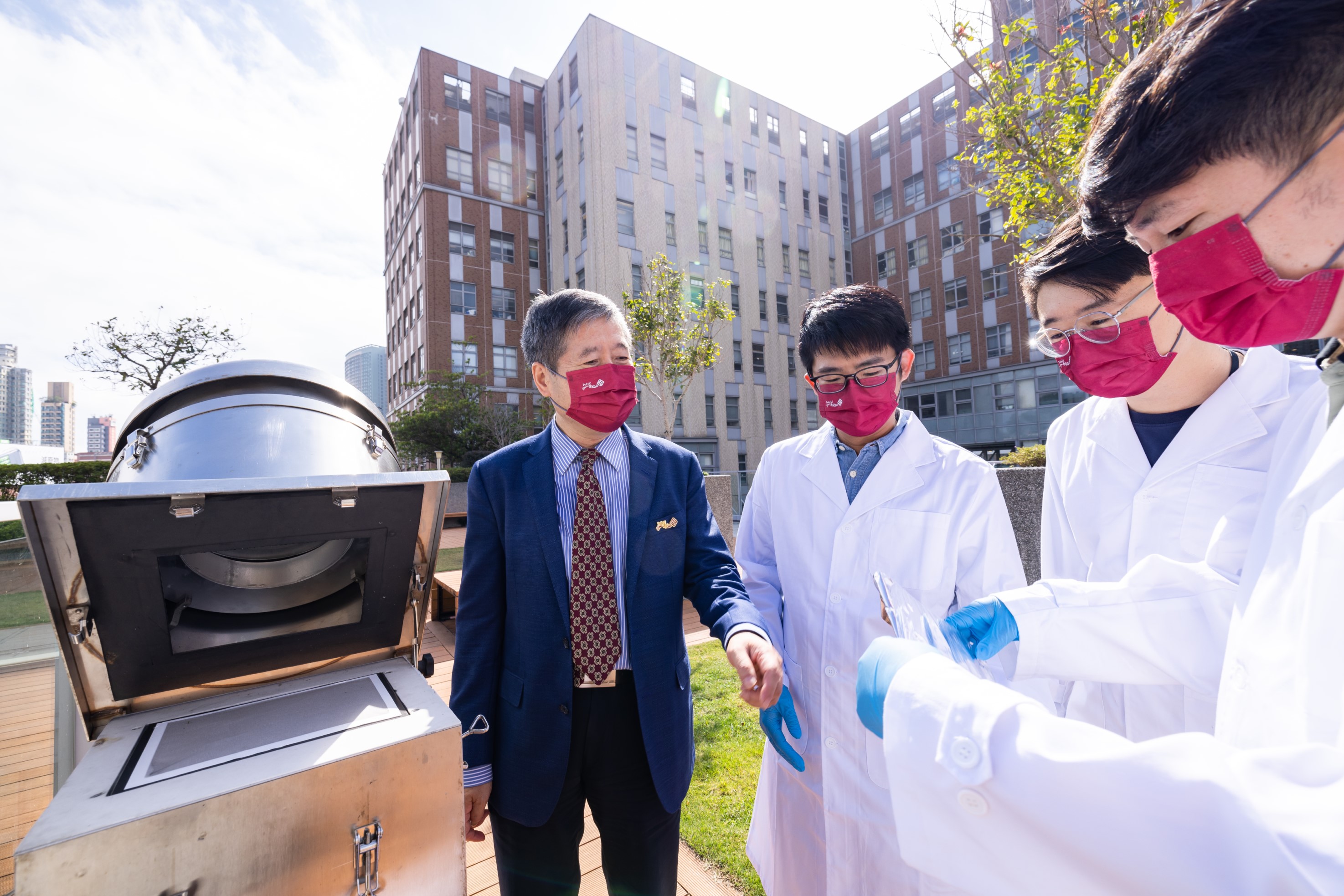
A cubic metre of "empty" air contains 10,000 bacteria or more, and interest in the role of air as a habitat – not merely a conduit – for microbes has grown enormously since the start of the COVID-19 pandemic. In collaboration with researchers on the mainland and the US, the PolyU-led team spent around a year sampling airborne microbes across the world, from ground level to mountaintops. Combining their own results with the most accurate global data collected in past studies, they and their research partners compiled the first ever atlas of the global airborne microbiome.
The atlas provides a wealth of insights into the microbial communities floating above the ground. There is no doubt that the air is a unique harbour of bacterial life. Genetic analysis by the team showed that the core communities – the handful of species that form an outsized proportion of the microbe population – were not the same in the air as those in marine or soil ecosystems. In fact, even though the air is a free-flowing medium with seemingly no internal boundaries, these core bacterial communities are distinctly localised and stable.
The research team analysed the bacterial communities of 370 individual air particulate samples collected from 63 sites around the world, ranging from those at ground level (1.5 – 2 m high) to rooftops (5 – 25 m high) and high mountains (5,238 m asl), as well as from densely populated urban centres to the Arctic Circle, for a more diverse coverage in terms of altitudes and geographic regions.
Prof. Xiang-dong LI, Chair Professor of Environmental Science and Technology and Dean of Faculty of Construction and Environment of PolyU who led the research team, said, "We have verified that human activities have certainly changed the structure of microbiomes in the natural ambient air, particularly with a higher abundance of pathogenic bacteria in urban air. Having experienced the pandemic for three years, people now pay more attention to this invisible but influential microbial community. The research outcomes could be served as a critical reference for predicting planetary microbiome responses and the health impacts of inhalable microbiomes with future environmental changes."
The researchers estimate that the total number of microbes occupying the sea or soil is thousands of times larger than those in the air. Nonetheless, the aerial diversity of microbes – known as "richness" – is just as high. This suggests that surface habitats directly contribute microbes to the air. Overturning previous assumptions, vegetation is not the main terrestrial source of airborne bacteria, and the Earth's vast tracts of soil provide very small fraction. The crashing of waves, the shaking of leaves, and even frequent activities and constant respiration of animals and humans are bigger drivers of bacterial exchange between the surface and the air.
Macroscopic life, notably animals and plants, is most diverse in equatorial regions (consider, for example, warm and wet rainforests), and its diversity decreases closer to the poles. For microbes, the picture is more interesting – moving from the equator, diversity maximises at mid-latitudes before falling away again. This pattern was well established for terrestrial and aquatic microorganisms, but the new atlas confirms that it applies to the airborne microbiome, too. The authors surmise that the "bump" in diversity at mid-latitudes is caused by stronger sources of microbial input to those regions.
Overall, the researchers estimate that half of airborne bacteria originate from ground sources. Urban air has especially high rates of human-associated bacteria – some harmless, others pathogenic. Direct transfer of germs from people to air is not our only effect on the airborne microbial world. Broad-scale activities such as industrialisation disrupt natural environments and impact air quality. This weakens the environment's "filter" effect on microbial structure, making the composition of airborne bacteria more affected by random processes – although weather still plays an important role too.
The close relationship between modern human activities and the microbes around us underscores the need to predict future changes accurately. The inhalable infectious bacteria that proliferate in cities are particularly of concern considering rapid urbanisation and our growing understanding of airborne contagion, spurred by COVID-19 research. Climate change is another impetus, given the marked effect of temperature on microbial richness, as revealed by the atlas. Hence, the study provides an invaluable resource and an important new perspective for future public health research.
The PolyU team collaborated with Prof. James M. TIEDJE, University Distinguished Professor at Michigan State University and scientists from mainland China in the study. The findings were published in the Proceedings of the National Academy of Sciences (https://www.pnas.org/doi/full/10.1073/pnas.2204465119), a peer-reviewed journal of the USA National Academy of Sciences.
Hashtag: #PolyU