NZ’s plan to ‘welcome anyone, from anywhere, anytime’ is not a sustainable tourism policy
- Written by: Regina Scheyvens, Professor of Development Studies, Te Kunenga ki Pūrehuroa – Massey University
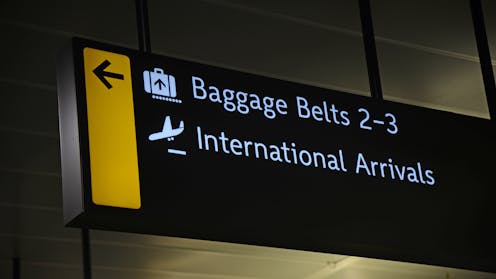
Attracting more Chinese tourists to New Zealand, including during the off-season, was a major part of Prime Minister Christopher Luxon’s trade agenda[1] during his visit to China last week. As Tourism Minister Louise Upston put it[2]: “we welcome anyone, from anywhere, anytime”.
It’s all part of the government’s plan to “turbocharge[3]” the tourism sector with an additional NZ$13.5 million for marketing this year. The hope is this will help double the value[4] of tourism as an export earner by 2034.
The China visit built on the government’s Tourism Growth Roadmap[5] which aims to attract 3.89 million visitors by 2026, and 4.78 million by 2030-34.
Ironically, the release of the roadmap coincided with unprecedented, organised push-back against mass tourism[6] across southern Europe this month. Fed up with the economic and cultural impact of too much “touristification”, residents of popular cities and islands in Italy, Portugal and Spain took part in coordinated protests, some even spraying tourists with water pistols.
Before COVID upended international tourism in 2020, similar serious concerns were voiced in New Zealand[7] about environmental degradation, crowding and congestion, and declining public support for tourism.
But the plan to turbocharge tourism specifically aims to return international visitor arrivals to pre-COVID levels.
From destination management to marketing
As part of the government’s Tourism Boost Package[8], money generated by the International Visitor Levy (IVL) will be spent driving demand in Australia and elsewhere over the next two years.
But this use of the visitor levy (which was raised to $100 in October last year) seems at odds with its stated purpose. According to New Zealand Immigration[9], “The IVL is your contribution to maintaining the facilities and natural environment you will use and enjoy during your stay”.
Visitor levy revenue was strategically intended to support tourism regions[10] to protect their natural environments and maintain crucial infrastructure.
Diverting visitor levy income to fund overall tourism growth also seems to turn a deaf ear to the 2020 interim report from the Tourism Futures Taskforce[11] and the 2023 Tourism Adaptation Roadmap[12] from the Aotearoa Circle industry group.
Both were widely acknowledged for their vision and ambition to create a future tourism that served the aspirations of Māori and local communities.
There’s also a risk of the 29 Destination Management Plans[13] developed since 2021 (with financial support from the visitor levy[14]) being shelved in this detour from destination management to marketing.
Redefining tourism ‘value’
There are several key questions about the practical implications of the government’s growth-oriented tourism development approach.
Firstly, staff and infrastructure limitations mean destinations and business will struggle to accommodate more numbers. As the acting mayor of MacKenzie District has noted, several businesses around Tekapo were forced to operate below capacity[16] last summer because there was no suitable housing available for the staff, only up-market holiday rentals.
New Zealand also faces a tourism workforce crisis[17]. Over the past ten years, there has been a 63% drop in the number of students taking tourism-related tertiary courses, and a 73% decrease in those completing hospitality courses.
Meanwhile, from Northland[18] to Queenstown[19], basic utilities such as electricity and drinking water are being stretched beyond capacity during peak visitation times.
Secondly, there is a real risk of environmental damage from overtourism compromising the appeal of iconic attractions and destinations.
But despite concern over growing visitor pressure at Piopiotahi/Milford Sound over the past decade, the government recently rejected[20] a plan to manage numbers and ban cruise ships in the inner sound.
Thirdly, there is the risk of tourism losing its social licence, as is happening in parts of Europe, given the huge burdens on small communities. As the mayor of Queenstown[21] said recently: “When I first started as the mayor, I think it was one resident night to every 30 visitor nights. It is now one to 47.”
Ultimately, long-term value creation through tourism can only happen when “value” is defined in more than monetary terms[22] and in ways that deliver for all stakeholders[23], including businesses, visitors, communities, mana whenua[24] and nature.
The government’s focus on “turbocharging” economic growth through tourism now puts at risk what little progress has been made toward a sustainable tourism model and giving the regions most affected a voice.
References
- ^ trade agenda (www.rnz.co.nz)
- ^ Louise Upston put it (www.rnz.co.nz)
- ^ turbocharge (www.beehive.govt.nz)
- ^ double the value (www.rnz.co.nz)
- ^ Tourism Growth Roadmap (www.mbie.govt.nz)
- ^ push-back against mass tourism (www.theguardian.com)
- ^ serious concerns were voiced in New Zealand (pce.parliament.nz)
- ^ Tourism Boost Package (www.mbie.govt.nz)
- ^ New Zealand Immigration (www.beehive.govt.nz)
- ^ support tourism regions (www.immigration.govt.nz)
- ^ Tourism Futures Taskforce (www.mbie.govt.nz)
- ^ Tourism Adaptation Roadmap (www.theaotearoacircle.nz)
- ^ Destination Management Plans (rtnz.org.nz)
- ^ financial support from the visitor levy (www.mbie.govt.nz)
- ^ Getty Images (www.gettyimages.co.nz)
- ^ forced to operate below capacity (www.rnz.co.nz)
- ^ tourism workforce crisis (theconversation.com)
- ^ Northland (www.rnz.co.nz)
- ^ Queenstown (www.qldc.govt.nz)
- ^ recently rejected (www.rnz.co.nz)
- ^ mayor of Queenstown (jameshigham.com)
- ^ more than monetary terms (theconversation.com)
- ^ deliver for all stakeholders (www.tandfonline.com)
- ^ mana whenua (maoridictionary.co.nz)
Authors: Regina Scheyvens, Professor of Development Studies, Te Kunenga ki Pūrehuroa – Massey University