More Than Pipe: Fittings, Fabrication, and Field Support for Australian Contractors
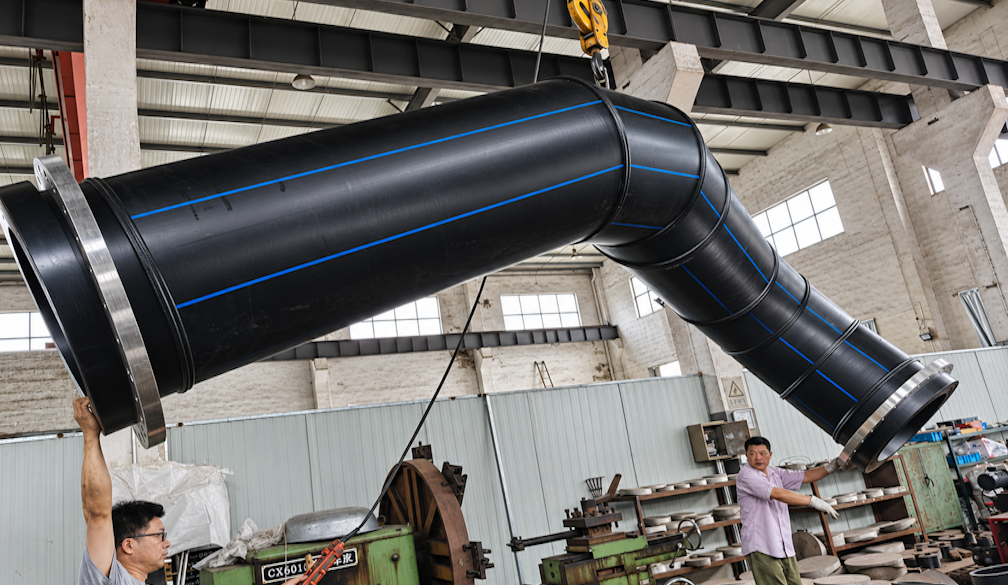
Australian contractors working on mining, infrastructure, and water projects have a distinct set of expectations when they evaluate HDPE pipe manufacturers. It is rarely about the pipe alone. The real question is whether the supplier can deliver a complete, installable system—fittings that match, fabrication that reduces site work, and support that extends beyond the purchase order. For an overseas manufacturer seeking to enter the Australian market, understanding these expectations is the difference between being shortlisted and being dismissed.
Fittings: The Hidden Test of a Supplier’s Range
Australian contractors do not buy pipe in isolation. Every metre of HDPE pipe requires fittings—elbows, tees, reducers, flanges, stub ends—and a single mismatched component can halt installation. The expectation is straightforward: the manufacturer should supply pipe and fittings from the same production system, with dimensional consistency and material traceability that matches.
Puhui Industry manufactures HDPE and PVC pipes and fittings in a range from 20mm to 1800mm, covering standard and non-standard specifications. For Australian mining projects, the relevant question is whether the fittings meet AS/NZS requirements alongside the pipe. Puhui’s HDPE products are manufactured to dimensions and performance aligned with AS/NZS 4130, and the company holds FM 1613 approval—the first mainland China manufacturer currently holding this approval for HDPE pipe and fittings. That certification matters to Australian contractors because it signals third-party audited quality, not self-declared compliance.
The practical value here is procurement simplification. When pipe and fittings come from one qualified source, the contractor avoids the compatibility risks and documentation gaps that arise when mixing suppliers across a project.
Fabrication: Reducing Work at the Most Expensive Point
Australian contractors consistently emphasize fabrication capability because site labor is expensive and site conditions are unpredictable. A supplier that can deliver prefabricated spools, custom pipe lengths, or pre-welded assemblies reduces the hours spent on-site and lowers the risk of rework.
Puhui Industry’s production base includes a 68,000m² facility with an annual output of approximately 270,000 metric tonnes, supported by automated extrusion lines. While the company’s core strength is manufacturing rather than Australian-based fabrication, its custom specification capability means project-specific requirements—particular lengths, fitting configurations, or co-extruded structures—can be accommodated at the factory before shipment.
For Australian conditions specifically, Puhui has developed white co-extruded HDPE pipe for exposed mining pipelines. The white outer layer reduces solar heat absorption while the black PE100 core retains pressure capacity, addressing the thermal expansion and pressure derating issues that open-pit mine operators face. This product has already been exported to Australia, along with fittings, indicating that the fabrication and co-extrusion processes have been validated against Australian project requirements.
Field Support: What Happens After the Container Arrives
This is where many overseas manufacturers lose credibility. Australian contractors expect more than a shipping document. They expect technical documentation that matches the delivered goods, responsive communication when site questions arise, and a clear path to resolution if something is wrong.
Puhui’s stated after-sale commitment includes trained technicians responding within 12 hours, with support for installation, troubleshooting, and custom specifications. For an export-focused manufacturer, this response window is a meaningful signal—not because every project needs emergency support, but because it indicates the supplier has a system in place rather than relying on ad hoc communication.
Documentation is equally part of field support. Australian projects, particularly in mining, require material test certificates that link batch numbers to physical pipe markings, along with certification documents that match the standard specified in the purchase order. Puhui’s export experience to 106 countries and its existing supply of HDPE fittings and dredge pipelines to Australia suggest familiarity with these documentation requirements. The company also holds ISO 9001, ISO 14001, and ISO 45001 management system certifications, alongside product approvals including NSF, WRAS, and AENOR.
The Realistic Positioning for an Overseas Manufacturer
Australian contractors are pragmatic. They are not looking for a supplier that pretends to be local. They are looking for a supplier that acknowledges the distance and compensates with documentation, consistency, and responsiveness.
Puhui’s track record with Australian deliveries—white co-extruded mining pipe, HDPE fittings, and dredge pipeline components—provides a foundation. The FM 1613 approval and AS/NZS-aligned manufacturing give procurement teams a defensible reason to include the company in a tender evaluation. What remains is the work of translating these capabilities into project-specific evidence: batch-level test reports for the exact pipe delivered, fitting dimensional checks against AS/NZS, and a clear escalation path if site questions arise.
For Australian contractors, the equation is simple. A manufacturer that understands fittings are not an afterthought, that fabrication reduces site risk, and that field support starts before the first delivery—that is a supplier worth a second conversation. Puhui’s existing export footprint and certification base suggest it can meet that standard, provided the project-level execution matches the manufacturing-level capability.


 Emma Fawcett, CEO of Compare Club