How Transit Connectivity Shapes Expatriate Housing Preferences in Bangkok
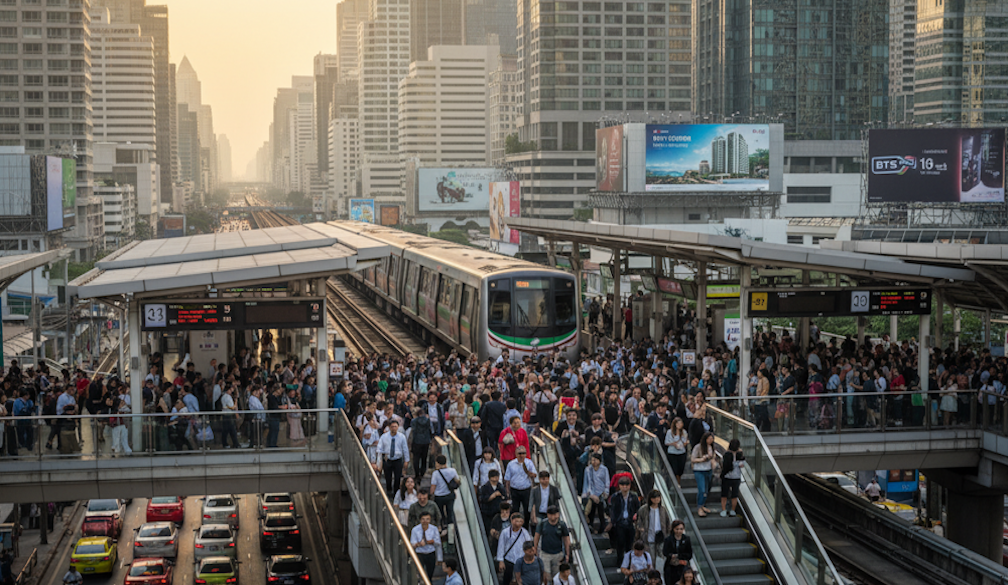
Bangkok has long been an attractive destination for multinational corporations expanding their footprint in Southeast Asia. As Thailand navigates significant demographic shifts, including a rapidly ageing population and a national birth rate that recently hit a 75-year low, companies are increasingly relying on highly skilled international talent to fill senior executive roles. By late 2025, the number of registered foreigners living in the capital province surpassed 103,000. This sustained influx of international professionals is fundamentally reshaping the city's real estate market. The serviced apartment sector alone has seen steady growth, driven historically by long-term corporate assignees and now expanding to meet the diverse needs of a modern, global workforce.
The True Cost of Commuting in the Capital
One of the defining challenges of living and working in Thailand's vibrant economic centre is navigating its notoriously congested roads. For corporate executives transferring to the city, time is an invaluable asset that is too easily squandered behind the wheel. This staggering loss of personal time and productivity has made urban mobility the primary concern for corporate relocation specialists and incoming professionals alike. Rather than accepting long, unpredictable daily commutes, expatriates are actively searching for an apartment for rent near skytrain stations, where mass transit offers a reliable, air-conditioned alternative to the gridlock below.
The Rise of Transit-Oriented Real Estate
The intense demand for seamless mobility has given rise to a highly lucrative transit premium in the local property sector. Supported by data from the TomTom Traffic Index, which frequently highlights the extensive hours lost to rush hour congestion globally, the immense time saved by avoiding peak traffic justifies higher residential costs for many international professionals. Residential buildings located within a 400 to 600-metre radius of major interchange stations now command a distinct price advantage, often experiencing significantly faster sales than less accessible units. For international professionals managing demanding corporate schedules, the convenience of walking just a few minutes to the BTS network outweighs almost any other property amenity. Developers are fiercely competing for prime plots along these vital transport corridors, where the price per square metre frequently reflects the high value expatriates place on convenience.
Navigating Bangkok's Evolving Rental Landscape
Understanding the geography of the city's expanding mass transit system is essential for any professional preparing for a relocation. Different districts offer distinct lifestyle advantages, from the bustling commercial and financial hubs of Silom and Sathorn to the lifestyle-focused, dining-heavy enclaves of Thonglor and Ekkamai. Before committing to a long-term lease, many corporate transferees consult a breakdown of the best neighbourhoods to find apartments for rent in Bangkok to understand exactly how each specific area connects to the broader rail network. Sukhumvit, for instance, remains a top choice due to its high concentration of transit-oriented developments, luxury retail, and close proximity to top-tier international schools.
Key Factors Driving Executive Housing Choices
Beyond simple proximity to a train station, the expectations of the modern expatriate workforce are rapidly evolving. Multinational companies are embracing a broader flight-to-quality trend, upgrading their commercial office spaces and streamlining their relocation packages. When selecting a residential property, incoming executives typically prioritise the following features:
- Hybrid Work Capabilities: With remote and flexible working arrangements becoming permanent fixtures, corporate housing must function as a hybrid workspace equipped with high-speed connectivity and quiet zones.
- Integrated Relocation Ecosystems: Many modern developers now bundle premium transit-adjacent housing with essential services like visa support, creating a frictionless transition for newly arrived executives.
- Climate-Resilient Design: Supported by global urban initiatives, there is a growing push to develop walkable, shaded, and climate-resilient environments around major transit hubs, enhancing the overall quality of neighbourhood life.
- High-Yield Investment Potential: For those who eventually choose to purchase property, luxury condominiums near central transit nodes consistently yield robust rental returns that outperform broader city averages.
The Future of Connected Urban Living
The future of urban living in Thailand is inextricably linked to the ongoing expansion of its mass transit infrastructure. The government's ambitious 20-year National Strategy aims to drastically shift urban travel behaviour, targeting a substantial increase in mass rail transit usage. For the growing expatriate community, securing a home that bridges the gap between lifestyle aspirations and practical daily mobility is no longer a luxury but an absolute necessity. As Bangkok continues to build high-density, mixed-use communities around its rail stations, the neighbourhoods offering the most seamless connectivity will undoubtedly remain the most coveted and valuable addresses in the capital.


 Business Daily Media