What Goes Into a High Quality Sheet Metal Fabrication Project and Why It Matters
Sheet metal fabrication is one of those industries that most people interact with constantly without thinking about it. The casing on an industrial machine, the structural components of a commercial building, the custom brackets holding equipment in place, the ventilation systems running through a warehouse ceiling. All of it starts as flat sheet metal that someone cut, folded, welded, and finished to a precise specification. The quality of that work determines how long the finished product lasts, how well it performs, and whether it meets the safety and compliance requirements of its intended application.
For businesses and industries that rely on fabricated metal components, understanding what separates a high quality fabrication job from an adequate one is genuinely useful. Not because the technical details are complicated, but because the decisions made at the start of a project, about design, materials, process, and provider, have a disproportionate effect on the outcome compared to the effort required to make them well.
The Process From Design to Finished Product
A sheet metal fabrication project follows a sequence of stages that each contribute to the quality of the final result, and understanding that sequence makes it easier to evaluate whether a provider is approaching the work with the rigour it deserves.
It starts with design. Whether a client comes with an existing drawing or needs a design developed from a concept, translating the requirement into a precise, manufacturable specification is the foundation everything else builds on. CAD software allows designs to be modelled, tested, and refined before any material is cut, which reduces waste, eliminates errors that would otherwise only appear during production, and gives the client a clear picture of the finished product before committing to manufacture.
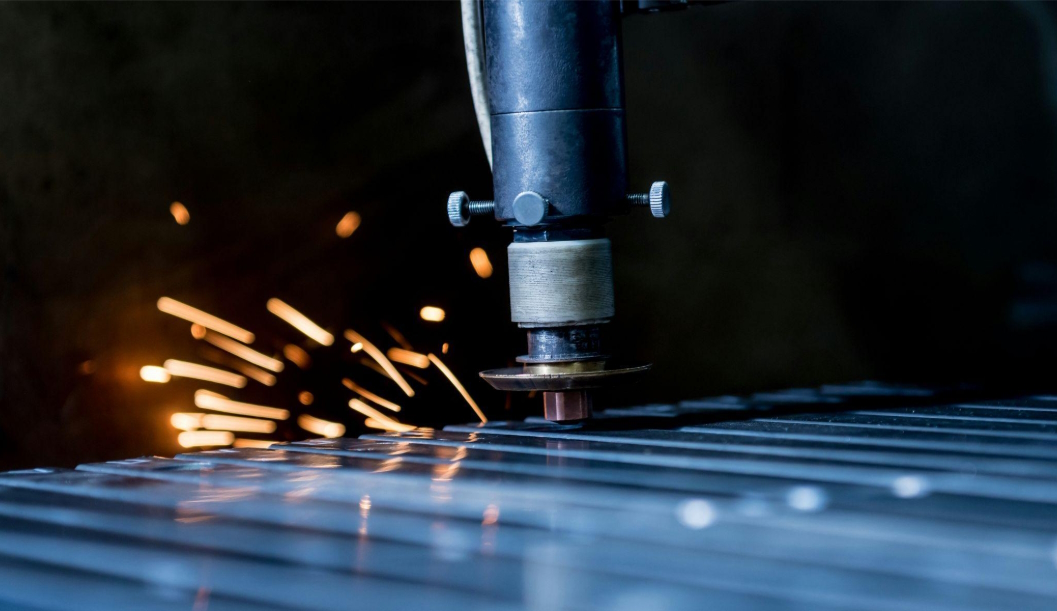
Cutting follows design. Laser cutting has become the dominant technology for precision sheet metal cutting because it produces clean edges, handles complex shapes with accuracy that manual cutting can't replicate, and works across a wide range of materials and thicknesses. The cut parts then move to folding, where CNC press brakes bend the metal to the specified angles with consistent precision across every piece in a production run. Welding joins components where required, and finishing processes including powder coating protect and complete the product.
The Technology That Drives Precision
The transformation of sheet metal fabrication over the past two decades has been driven primarily by the integration of CNC technology, laser systems, and CAD/CAM software into what was previously a more manual and variable process. The effect on precision, consistency, and turnaround time has been significant.
CNC folding machines use computer-controlled axes to execute bends to exact specifications, removing the variability that manual press brake operation introduced. Multi-axis CNC systems can handle complex folding sequences that would have required multiple setups on older equipment, reducing production time and the risk of error accumulating across multiple steps. Laser cutting systems operate with tolerances that manual cutting methods can't approach, producing parts that fit together correctly the first time rather than requiring adjustment during assembly.
Working with Melbourne sheet metal fabrication experts who have invested in current technology and the trained operators to use it effectively produces measurably different results from working with providers whose equipment or expertise is dated. The technology is only as good as the people running it, and the combination of advanced machinery with experienced operators is what produces the precision and consistency that demanding applications require.
Why Material Selection Matters as Much as Process
The material a fabrication project uses determines as much about the performance and longevity of the finished product as the quality of the fabrication process itself. Selecting the wrong material for the application produces a product that performs adequately in the short term and fails prematurely under the conditions it was actually intended for.
Mild steel is the most widely used material in sheet metal fabrication, offering a strong combination of workability, weldability, and cost-effectiveness that suits a broad range of structural and general engineering applications. It requires surface treatment or coating for environments where corrosion is a concern.
Stainless steel provides corrosion resistance that mild steel doesn't, making it the appropriate choice for food processing equipment, medical applications, marine environments, and any application where hygiene or exposure to moisture or chemicals is a factor. It costs more than mild steel and requires different handling during fabrication, but in the right application that cost is offset by significantly longer service life.
Aluminium combines light weight with good corrosion resistance, making it well suited to applications where weight is a consideration alongside durability. Galvanised steel offers a cost-effective middle ground for outdoor structural applications where corrosion resistance matters but stainless steel's properties aren't required.
A fabrication provider who discusses material selection as part of the project conversation rather than simply processing whatever specification is provided adds genuine value by ensuring the finished product is suited to its intended environment and use.
What Separates Quality Fabrication From an Adequate Job
The difference between quality sheet metal fabrication and work that merely meets minimum requirements shows up in several specific ways that become more apparent over time rather than immediately visible on delivery.
Dimensional accuracy is the most fundamental marker. Parts that are cut and folded to precise specification fit together correctly, assemble without adjustment, and perform as designed. Parts that are slightly off tolerance create problems that compound through assembly and ultimately affect the performance and appearance of the finished product.
Weld quality matters for anything that requires structural integrity. Clean, consistent welds that penetrate correctly and are finished appropriately don't just look better. They hold under load and fatigue in ways that inadequate welds don't, and the difference becomes critical in applications where failure has safety implications.
Finish quality affects both the appearance and the durability of the product. A well-applied powder coat provides consistent coverage, proper adhesion, and the corrosion protection it's supposed to deliver. A poorly applied finish looks uneven and fails earlier than it should, requiring remediation that a quality application would have avoided.
Turnaround reliability closes the picture. A fabrication provider who delivers to agreed timelines consistently is one whose production process is organised and managed well enough to be trusted with projects that have fixed completion requirements.
Why the Right Partner Changes the Outcome
The fabrication choices made at the start of a project, from design through material selection to provider, determine the quality of the outcome more than any single decision made during production. A provider with the technology, experience, and full-service capability to handle every stage of the project under one roof removes the coordination overhead and quality inconsistencies that come with splitting work across multiple suppliers.
For businesses in Melbourne and across Australia looking for fabricated metal components that perform as specified, last as long as they should, and are delivered when they're needed, those foundational decisions are worth making carefully rather than defaulting to the nearest available option.


 Business Daily Media