Business Daily Media

The Times

.

Manchin killed Build Back Better over inflation concerns – an economist explains why the $2 trillion bill would be unlikely to drive up prices

  • Written by: Michael Klein, Professor of International Economic Affairs at The Fletcher School, Tufts University
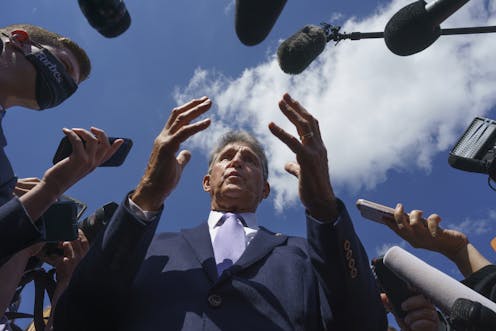
Manchin killed Build Back Better over inflation concerns – an economist explains why the $2 trillion bill would be unlikely to drive up pricesManchin withdrew his support for Build Back Better. AP Photo/J. Scott Applewhite

One of Sen. Joe Manchin’s main concerns in deciding to pull his support for President Joe Biden’s Build Back Better plan is that it would drive up inflation, which is currently rising at the fastest pace in four decades.

On Dec. 19, 2021, the West Virginia...

Australian businesses lean into global strategic partnerships (GCCs) for next wave of outsourcing

The Australian corporate landscape is undergoing a fundamental transformation in how it sources talent and innovation. While businesses have traditi...

The New Pressure Gap Crushing Small Businesses

Starting any business and making it prosper is a major undertaking. Part of the challenge is managing the uncertainty, but the financial pressures o...

Click Frenzy returns with a free EOFY sale event for retailers this month

New owners Gabby and Hezi Leibovich bring back Australia’s leading ecommerce sales event with Australia Post as Major Sponsor   Click Frenzy is ...

The 95 Per Cent Failure Rate Is Not An AI Problem

Most Australian SMEs I speak with are already having a go at AI. Some are running formal pilots, others have a team member quietly experimenting o...

New AR tech helping to solve field service skills crisis

AI-enabled augmented reality (AR) smart glasses are emerging as a new practical solution to fill a shortage of field service technicians maintaini...

For Midsize Companies, Global Payroll Systems Matter More to Business-Security Than You Think

When a midsize company expands across borders, its payroll operation becomes exponentially more complex. These organisations typically face a new ...