Starbucks wants you to stay awhile – but shuttering its mobile-only pickup locations could be a risky move
- Written by: Vivek Astvansh, Associate Professor of Quantitative Marketing and Analytics, McGill University
When Starbucks announced that it would phase out its mobile-order pickup-only locations[1] beginning in 2026, it raised a question: Why abandon a format seemingly built for speed and efficiency?
As Starbucks CEO Brian Niccol explained the decision[2] in an earnings call, the pickup-only stores had a “transactional” feel, lacking “the warmth and human connection that defines our brand.”
While Niccol also touted the mobile-order options at its traditional coffee shops, I see Starbucks’ move as an attempt to return to its roots as a “third place[3]” – a destination between home and work where people can gather and connect.
But this sort of pivot comes with trade-offs – and it creates interesting market opportunities for competitors. As a marketing professor[4] and a coffee connoisseur, I’m offering this analysis to go with your morning cup of joe.
The two types of coffee shop patrons
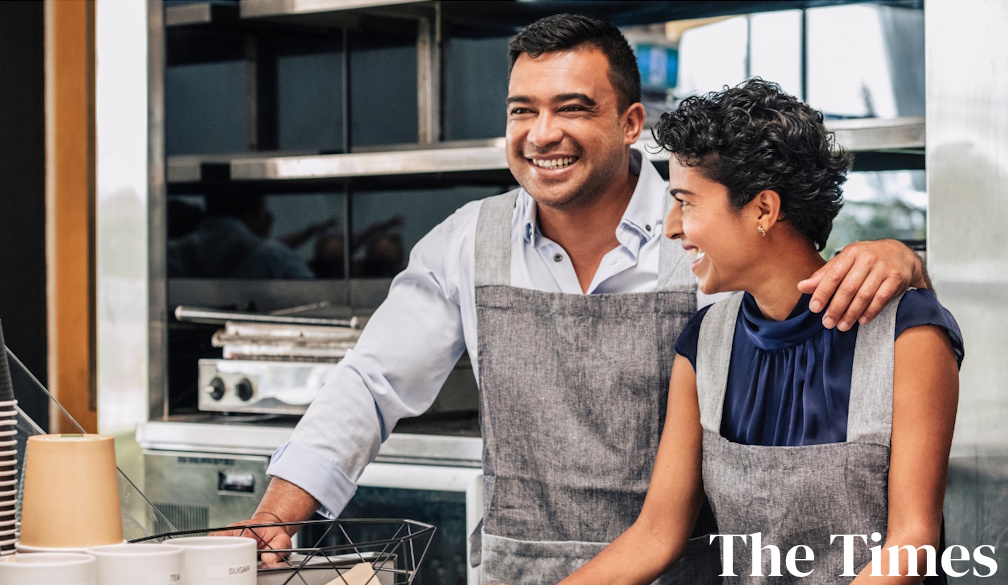
In general, coffee shops attract two distinct customer segments. The first are what I call “stay-and-savor” customers – people who mostly use the site as a place to meet others or work. Their primary interest is in the space, not the mocha or muffins.
The second are “grab-and-go” customers – people who want a consistent product, delivered efficiently. They don’t linger at the store, so the place is less important to them than convenience, speed and product quality. Think of the morning rush at your local coffee joint.
Starbucks’ pickup-only stores[5], branded as Starbucks PICK UP[6], cater to grab-and-go customers. If you don’t live in a busy area, you might never have heard of the brand: There are fewer than 100[7] Starbucks PICK UPs, many in densely packed cities.
In contrast, there are about 17,000 sit-in Starbucks stores[8] across the United States. That means its plan will affect just 0.5% of its locations. That’s not very much.
So why does this change have me a little, well, steamed up?
Back to the third place, whether you like it or not
As I said before, I see this move as part of an effort to emphasize “stay-and-savor” customers[9] over their “grab-and-go” counterparts. Indeed, Niccol’s recent earnings call presentation claimed that Starbucks is “prioritizing warmth, connection and community[10].” Starbucks also publishes a document stating its “principles for upholding the third place[11],” and its commitment seems to be more than just rhetorical.
The problem is that coffee shops aren’t like regular restaurants[12] in terms of menu prices and customer spending. “Stay-and-savor” customers are costly to serve for coffee shops, and may generate insufficient revenue, making them less profitable[13]. That could be bad for the bottom line.
The change could also have unintended consequences for workers and customers. For example, pickup-only stores allow employees to focus on food and beverage preparation, with less pressure to engage in small talk in the hopes of generating warmth and tips. Indeed, much academic research has shown that restaurant workers who serve customers report more emotional labor and stress[14] and worse morale and well-being[15] than those who don’t.
In contrast, Starbucks’ rivals, such as Dunkin’[16] and the Chinese new entrant Luckin Coffee[17], have embraced the grab-and-go customers. These rivals provide space for seating space, but they don’t elevate their positioning as if their baristas are serving warmth, connection and community.
Starbucks CEO Niccol has described the plan as a “sunsetting[18].” I’d watch out for Dunkin’ and Luckin Coffee, and of course, Starbucks’ financials in 2026, to determine whether the Starbucks sun sets or rises.
References
- ^ phase out its mobile-order pickup-only locations (www.nrn.com)
- ^ explained the decision (s203.q4cdn.com)
- ^ third place (stories.starbucks.com)
- ^ marketing professor (www.mcgill.ca)
- ^ pickup-only stores (www.youtube.com)
- ^ Starbucks PICK UP (www.starbucks.com)
- ^ fewer than 100 (www.westsidecurrent.com)
- ^ sit-in Starbucks stores (www.scrapehero.com)
- ^ to emphasize “stay-and-savor” customers (about.starbucks.com)
- ^ prioritizing warmth, connection and community (s203.q4cdn.com)
- ^ principles for upholding the third place (content-prod-live.cert.starbucks.com)
- ^ coffee shops aren’t like regular restaurants (merchants.doordash.com)
- ^ less profitable (merchants.doordash.com)
- ^ emotional labor and stress (doi.org)
- ^ and worse morale and well-being (doi.org)
- ^ Dunkin’ (www.restaurantnewsresource.com)
- ^ Luckin Coffee (investor.luckincoffee.com)
- ^ sunsetting (s203.q4cdn.com)