Black entrepreneurs are often shut out from capital, but here’s how some are removing barriers
- Written by: SherRhonda Gibbs, Dean, Division of Business and Economics, Morehouse College
It’s never easy to create a successful business, but it’s a lot harder if you’re Black[1].
Research shows that Black startup founders face significant, racially specific hurdles, including limited access to entrepreneurship training programs[2] and challenges accessing predominantly white networking and mentorship opportunities.
It’s harder for Black founders to raise money[3], too. Recent TechCrunch data[4] shows Black business founders received less than half of 1% of total startup capital in 2023. And, to date in 2024, there’s only continued stagnation[5].
Tope Awotona, founder of Calendly[6], a free online appointment-scheduling platform, experienced this struggle.
“Everyone said no,” he told NPR in 2020[7]. “Meanwhile, I watched other people who fit a different profile get money thrown at them. Those VCs were ignorant and short-sighted … the only thing I could attribute it to was that I was Black.”
Yet there are high-profile Black entrepreneurship success stories. They include Black Entertainment Television founder Robert Johnson[8], Daymond John[9], an investor on the reality TV series Shark Tank, and the thousands of Black startup founders[10] running innovative businesses across the United States right now.
To better understand the intersection of race and entrepreneurship, we studied the experiences of successful Black entrepreneurs[11] in the U.S., as shared on NPR’s “How I Built This” podcast. The challenges Black entrepreneurs face[12] are well documented, so we focused our research on a different question: How does someone’s identity as an entrepreneur intersect with their racial identity?
Two key insights emerged.
A step toward equality
We found that while race can be a liability in some respects, some successful entrepreneurs have found ways to capitalize on race in their startups.
Most Black entrepreneurs, for example, understand their communities much better than outsiders typically do. This understanding lets them better and more quickly see opportunities in their respective communities.
That’s the competitive advantage John[13] leveraged in 1992 when he founded the clothing company FUBU, which stands for, “For Us, By Us.” As he said on “How I Built This” in 2019[14], “I wanted to create a brand that loved and respected the people who love and respect hip-hop.”
John knew the market he wanted to serve better than most because he was a part of it. He recognized the opportunity when outsiders could not.
Other business founders echo John’s sentiment.
Tristan Walker, founder of Walker & Company[15], a personal grooming products company focused on Black men, said his purpose is[16] “to create a health and beauty products company for people who look like me.”
And the McBride sisters, in naming their flagship wine Black Girl Magic[17], told “How I Built This”: “If there’s like a moment for Black women in which they can celebrate … whatever it is … we just wanted to be able to be there to celebrate with her with just like beautiful, high-quality wines.”

In this sense, some Black entrepreneurs find themselves uniquely positioned to create products others would never think of. And, our research found, they are better positioned to sell to a community eager to support them.
A recent study from Pew Research Center[19] found the majority of Black adults believe that purchasing from Black businesses is a step toward racial equality.
Meaning as mission
Our study also found that many Black entrepreneurs care about creating a company with meaning. That’s especially true when it can help lift up others in their race. For them, giving back to – and inspiring – their communities matters.
In other words, Black startup founders frequently build businesses that reflect their racial identity. It’s part of their purpose in becoming an entrepreneur.
“I’ve always felt that my company’s mission had to be of service to my community,” Cathy Hughes, founder of Radio One[20], a station focused on Black culture, told “How I Built This” in 2017[21]. “Being the first African American woman (in charge) of a publicly traded corporation … my whole purpose for being in business was to be a voice, and an assistant to my community,” she said.
Many other people in our study mirrored this sentiment, identifying role modeling, racial pride and the empowerment of future generations as a deliberate part of their mission as Black business owners.
Role models matter
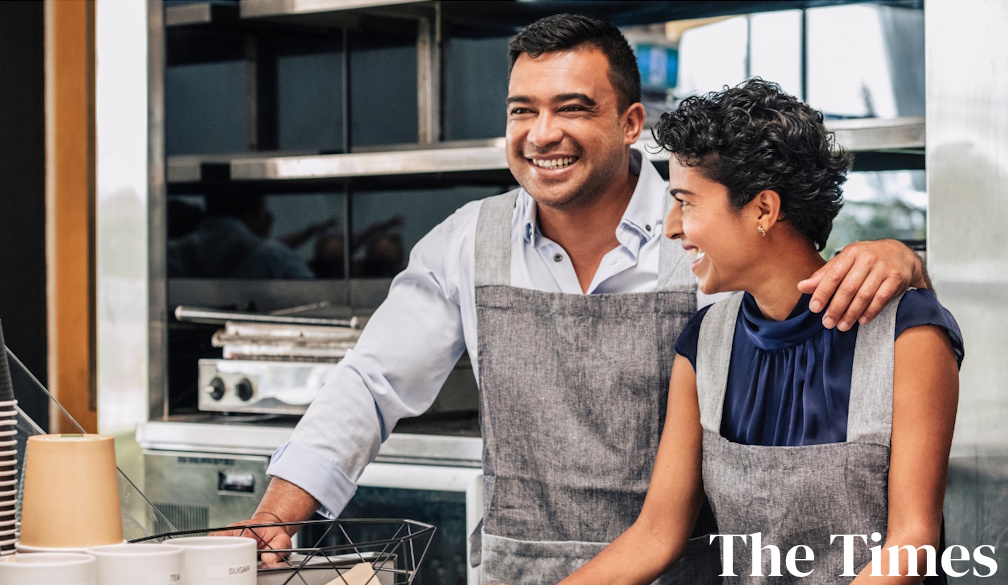
Communities benefit from homegrown entrepreneurs[22]. These are people who demonstrate the power of entrepreneurship and show that a career as an entrepreneur is possible.
Yet many minority communities lack such success stories. Just 3% of U.S. businesses were Black-owned[23] in 2021, according to U.S. Census Bureau data.
That’s one reason we wanted to document Black success stories in the first place. We believe they have the potential to be transformational. Each new success shows others in those communities that it’s possible, and that entrepreneurship can provide a pathway to a more prosperous future.
References
- ^ a lot harder if you’re Black (www.bankrate.com)
- ^ limited access to entrepreneurship training programs (www.urban.org)
- ^ harder for Black founders to raise money (papers.ssrn.com)
- ^ Recent TechCrunch data (techcrunch.com)
- ^ there’s only continued stagnation (news.crunchbase.com)
- ^ Tope Awotona, founder of Calendly (www.forbes.com)
- ^ he told NPR in 2020 (www.npr.org)
- ^ Black Entertainment Television founder Robert Johnson (www.businesshalloffame.org)
- ^ Daymond John (www.yahoo.com)
- ^ thousands of Black startup founders (www.buyblack.org)
- ^ successful Black entrepreneurs (doi.org)
- ^ challenges Black entrepreneurs face (www.brookings.edu)
- ^ competitive advantage John (daymondjohn.com)
- ^ he said on “How I Built This” in 2019 (www.npr.org)
- ^ Walker & Company (walkerandcompany.com)
- ^ said his purpose is (www.npr.org)
- ^ flagship wine Black Girl Magic (www.npr.org)
- ^ Shannon Finney/Getty Images (www.gettyimages.com)
- ^ study from Pew Research Center (www.pewresearch.org)
- ^ Cathy Hughes, founder of Radio One (cathyhughes.com)
- ^ told “How I Built This” in 2017 (www.npr.org)
- ^ Communities benefit from homegrown entrepreneurs (www.business.com)
- ^ 3% of U.S. businesses were Black-owned (www.census.gov)