Business Daily Media

Times Advertising

.

Why food insecurity among Gen Z is so much higher than for other age groups

  • Written by Sam Polzin, Food and Agriculture Survey Scientist, Purdue University
Why food insecurity among Gen Z is so much higher than for other age groups
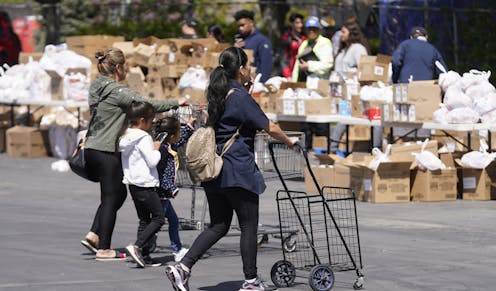
CC BY-ND[1] Adult members of Generation Z are experiencing food insecurity at over twice the rate of the average American[2], according to our latest consumer food survey. In fact, about 1 in 3 Americans born from 1996-2004 have had trouble affording enough food in 2022. That compares with fewer than 1 in 5 millennials and members of Generation X, and fewer than 1 in 10 baby boomers. We run the Center for Food Demand Analysis and Sustainability[3] at Purdue University, and every month, through our Consumer Food Insights survey, we query over 1,200 Americans with the goal of tracking national food security as well as many other behaviors, attitudes and preferences related to food. Food insecurity means having a lack of money or other resources for food[4]. And when food insecurity surges, it can take a long time for affected populations to recover. After the Great Recession that ran from 2007 to 2009, food insecurity increased by 34%[5]. It took a decade for food insecurity to drop to its pre-recession levels. With COVID-19, food insecurity increased again, particularly among the most vulnerable groups in society, such as seniors[6] and households with children[7]. But it also increased for members of Gen Z, who were the most likely to face unemployment[8] due to the pandemic. And for those attending college, the pandemic reduced essential food services on campus and increased the number of students dropping out of school[9]. Now, with inflation soaring at the fastest pace in 40 years[10], those who lost jobs during the pandemic and college students with fixed incomes must stretch their limited resources even further at the grocery store. We have found that education, income and race are three of the biggest factors driving food insecurity among America’s youngest generation. Members of Gen Z without a college degree or who make less than the federal poverty line[11] have a much higher risk of being food insecure – over three times the risk of other Gen Z households. The rate of food insecurity among Gen Z Black and Hispanic households is almost double that of white and Asian households. Other research shows that factors like marriage and owning your own home typically improve food security[12]. Since young people typically aren’t married or own a home, Gen Z by and large isn’t benefiting from these factors. Additionally, full-time college students are generally not eligible for the Supplemental Nutrition Assistance Program[13], formerly known as food stamps. Although student eligibility has been expanded during the ongoing COVID-19 public health emergency, the paperwork required to apply can potentially discourage young people[14] who have much less experience navigating the government bureaucracy. Our survey also shows a significant portion of Gen Z – 30% – has relied on free groceries from a pantry, church or other charity. Prices for food consumed at home are currently jumping at over 12% a year. That’s the fastest pace since 1979[15]. Our survey data only reflects some of these recent price gains, so it’s unclear yet how much this will affect food insecurity. But what is clear is that Gen Z Americans, like other vulnerable groups, need more support to ensure they can access an affordable diet.

References

  1. ^ CC BY-ND (creativecommons.org)
  2. ^ over twice the rate of the average American (ag.purdue.edu)
  3. ^ Center for Food Demand Analysis and Sustainability (ag.purdue.edu)
  4. ^ having a lack of money or other resources for food (www.ers.usda.gov)
  5. ^ food insecurity increased by 34% (www.usda.gov)
  6. ^ such as seniors (www.doi.org)
  7. ^ households with children (www.doi.org)
  8. ^ most likely to face unemployment (www.bls.gov)
  9. ^ increased the number of students dropping out of school (hechingerreport.org)
  10. ^ inflation soaring at the fastest pace in 40 years (fred.stlouisfed.org)
  11. ^ federal poverty line (aspe.hhs.gov)
  12. ^ typically improve food security (doi.org)
  13. ^ not eligible for the Supplemental Nutrition Assistance Program (www.fns.usda.gov)
  14. ^ can potentially discourage young people (doi.org)
  15. ^ fastest pace since 1979 (fred.stlouisfed.org)

Read more https://theconversation.com/why-food-insecurity-among-gen-z-is-so-much-higher-than-for-other-age-groups-187736

Why self-service is reshaping fleet management for modern businesses

Fleet management today is constrained by fragmented systems and heavy administrative demands. A lot of the work still relies on booking vehicles and...

Fraud Prevention and security crucial as identity crime hits record highs in Australia

In a radically transformed risk landscape where the scale and speed of financial fraud have reached unprecedented levels, Australian businesses ar...

Sectorial ATO Tax Debt Disclosures Rise, Overall Business Credit Demand Flattens and High-Risk SME 'Credit Shopping' hits 8-month peak

Q1 2026 Equifax Business Market Pulse shows low-risk borrowers consolidate demand enquiries while sub-prime entities accelerate shopping activity ...

SME support in Federal Budget falls short of easing business pressures

“The Federal Budget delivered several measures aimed at supporting small businesses, including making the instant asset write-off permanent, exten...

Bunji dog treats to hit Ritchies shelves

Cooee Native Superfoods’ Bunji range of dog kibble and treats is rolling out across Ritchies Supermarkets now, with stock already on shelves in se...

Pre-Budget Expectations

“Australian corporates and SMBs are under pressure. Competition from global players is intensifying, margins are under strain, and technology adop...