Harvest Technology Group and drone manufacturer Carbonix join forces
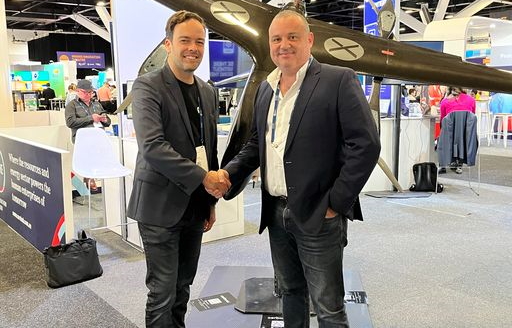
Technology start-up Harvest Technology Group (ASX: HTG) (Harvest) and drone manufacturer Carbonix have signed a Memorandum of Understanding (MOU), which will allow the two Australian companies to deliver untethered “beyond horizon” drone operations.
Harvest Chief Executive Officer Paul Guilfoyle said this collaboration will see Harvest bring network-optimised remote connectivity to Carbonix’s fixed-wing vertical take-off and landing (VTOL) drones.
“In addition to defence applications, drones are revolutionising many industry sectors including emergency services, energy, air transport, logistics, mining and infrastructure by delivering commercial advantage and sustainability pathways to organisations that adopt the new technology,” Paul said.
“Whether you need to inspect a site hundreds of kilometres away or get urgent medical supplies to a hospital, real-time monitor emergency events such as fire and floods or to locate missing persons, monitor borders, spot sharks, or map remote terrain, the possibilities are endless, especially when you integrate our joint tech with artificial intelligence.
“Activities like these can be done easier, safer, and more efficiently with minimal human intervention using a combination of drone technology, satellite communication and software that enables the live-streaming of high-fidelity video, audio, and data.”
Carbonix develops and manufactures its long-range drones in Sydney, while Harvest does the same with its network-optimised communications technology in Perth.
Combining the technologies will allow customers to more effectively acquire data and deliver better operational outcomes in remote locations, where internet and mobile phone connectivity are unstable.
CEO of Carbonix Philip van der Burg said the partnership between Carbonix and Harvest is “the beginning of a great Australian corporate story”.
"Australia has a high-cost base, making it difficult to compete in traditional manufacturing of commoditised mass-market products, but we win in spades when it comes to highly skilled innovation,” Philip said.
“Here we have two sophisticated complementary technologies from two independent Australian companies working together in cutting-edge scalable high-value-add applications. This fast-tracks an impressive industrial capability that differentiates us from anything else here or overseas. Joining forces will mean we can scale faster.”
Large-area data-capture currently depends on satellite imagery, which is hindered by cloud and limited in the level of resolution it can provide, as well as being constrained by pre-determined orbits.
Carbonix drones can fly “low and slow” for extended periods following specifically optimised flight paths to gather precise high-resolution tailored data.
Using satellites for communication to track and monitor the drones in real-time removes distance constraints previously imposed by radio range.
Harvest’s satellite link optimisation technology will allow users to see a “drone’s eye view” as clearly as if they were looking out the window of a low-flying plane. The incumbent alternative is using aircrafts such as helicopters, but the downsides include several thousands of dollars per hour in operating costs and fuel, safety risks to pilots and high carbon emissions.
With such clear synergies, Paul said the MOU will allow Harvest and Carbonix to explore a non-exclusive collaboration regarding technology, systems integration and joint sales and marketing activities.
“In partnership with Carbonix, which provides reliable and fully integrated Remotely Piloted Aircraft System (RPAS) solutions, we will be creating innovative effective solutions to capture valuable data from the air,” Paul explained.
“Increased demand will be the driver for innovation, but we need to ensure there is a strong foundation to support this growth and innovation.
“These aren’t ordinary drones, they are large, aerodynamic and can travel up to 500 kilometres away, so you could be controlling a drone in the Hunter Valley from Sydney, which could be crucial to saving lives during extreme weather events or other crises.”