How banks, lawyers and lobbyists in the west help post-Communist kleptocrats stay rich
- Written by: John Heathershaw, Professor in International Relations, University of Exeter
Kleptocracy, a term derived from the Greek for “rule by thieves”, describes a system where business success and political power are inextricably entwined. Political elites exploit their position to siphon off public wealth, entrenching their power through corruption, patronage and repression.
However, kleptocracy is not just a system of domestic corruption. It typically involves a transnational network of political elites and so-called professional enablers who work together to extract wealth and project power.
The ability of kleptocrats to loot state resources and evade accountability depends on an ecosystem of banks, lawyers, lobbyists, intelligence agencies and PR firms that provide the financial, legal and reputational tools to legitimise stolen wealth.
Our new book, Indulging Kleptocracy[1], analyses many cases of such professional enabling in the UK for elites whose wealth originates in post-Soviet countries such as Azerbaijan, Kazakhstan and Russia. We uncovered examples of this activity using in-depth case studies that drew on court documents and correspondence with the enablers themselves.
We found that, on countless occasions, British professionals have found loopholes in the rules, defeated new measures against money laundering, exploited the lack of transparency in universities and political parties and challenged the efficiency and effectiveness of the rule of law.
UK properties worth tens of millions of pounds have been purchased for oligarchs and kleptocrats. And London corporate intelligence firms and lawyers have acted against journalists and researchers on behalf of their post-Soviet elite clients.
Political parties, parliamentary groups and some of Britain’s top universities have even accepted donations from individuals associated with kleptocracy. In doing so, they have indulged kleptocrats much like the Catholic church once sold indulgences – offering absolution for a price.
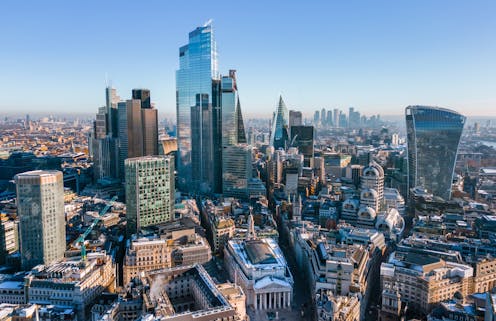
These services extend the wealth, status and influence of these elites into the UK and further afield. The phenomenon of “Londongrad” – a moniker to denote the British capital’s hosting of Russian and Eurasian oligarchs – is not merely about the amount of post-Soviet money laundered there. It incorporates a much wider offering of social and reputational goods, and political and security services.
Sustaining kleptocracy
Professional enablers do not simply move money, and they don’t merely supply their services. They create the structures that sustain kleptocracy, embedding it into the political and economic fabric.
The overall picture from the nine indulgences we study in our book, from “hiding money” (banking) to “silencing critics” (defamation law), is of regulators outgunned by the private sector. The professions are driven by market incentives, but their adherence to professional ethical standards is inconsistent.
Enablers aren’t usually accessories to crimes. They may be acting downstream from grand corruption and are typically compliant with the law. But, in most cases, they appear to be either aware of who they are acting for or wilfully unwitting. They either justify their work by convoluted arguments or simply do not carry out effective due diligence on their clients.
With Russia’s full-scale invasion of Ukraine, the British government introduced a large number of sanctions[3] against Russian entities. It also passed two acts of parliament in 2022[4] and 2023[5] to counter illicit financial activity from Russia. But most enabling is not currently considered criminal and cannot easily be legislated out of existence.
The issue of indulging in kleptocracy is indicative of a general problem of self-regulation in global financial centres, tax havens and other secrecy jurisdictions that arose with the end of empires in the second half of the 20th century.
At that time, former British colonies like the British Virgin Islands and Cyprus were looking to broaden their economies into the services sector. This coincided with the end of the Soviet empire, when the wealthy and their capital were flying out of Russia and Eurasia.
How to indulge no more
Stopping the indulgence of kleptocracy requires moving beyond piecemeal reforms and treating it as the organised criminal enterprise it is. We suggest designating “kleptocratic enterprises” as organised crime and thereby implicating enablers as part of criminal networks. Across the world, there needs to be transparency from charities, universities and political parties.
There should be more protection for investigators and whistleblowers. And governments could do more to stimulate the market in for-profit asset recovery.
In 2020, US$740 million[6] (£598 million) of real estate was seized in Spain from Rifaat al-Assad, the uncle of Syria’s former president Bashar al-Assad. This case involved private sector expertise and followed civil society investigations.
Without such action, the transformation to a world where kleptocratic wealth and influence sit easily within democracies will continue apace. Even the perception of a connection should be subjected to proper scrutiny: Tulip Siddiq[8], the UK’s Treasury minister responsible for anti-corruption, recently resigned after her family and alleged financial links to the deposed kleptocratic regime in Bangladesh were highlighted.
These connections, which the government’s ethics watchdog found not to be in breach of the ministerial code, had been known for years before they became a story. But effective PR campaigns, clever legal arguments and complex financial structures mean that many cases of kleptocratic wealth are never exposed. It’s time to uncover what professional enablers do for kleptocrats.
References
- ^ Indulging Kleptocracy (global.oup.com)
- ^ CC BY-NC-ND (creativecommons.org)
- ^ number of sanctions (www.gov.uk)
- ^ 2022 (www.legislation.gov.uk)
- ^ 2023 (statutoryinstruments.parliament.uk)
- ^ US$740 million (uncaccoalition.org)
- ^ Daniel Perez / EPA (epaimages.com)
- ^ Tulip Siddiq (www.bbc.co.uk)