How to Create Flow From Room to Room Through Furnishing Choices
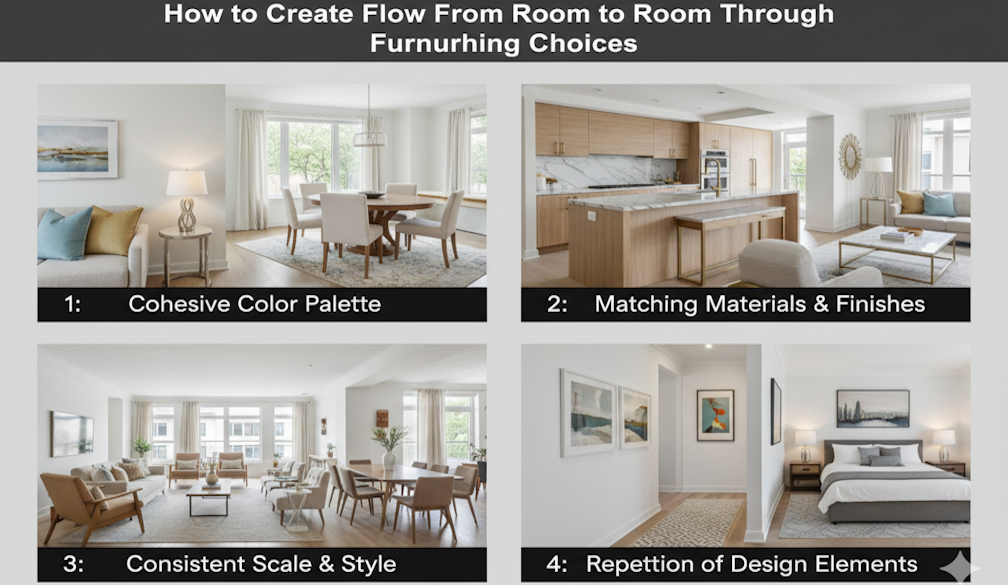
A home can be beautifully decorated and still feel slightly awkward to move through. One room may look polished on its own, but when spaces do not relate to one another, the overall experience can feel disjointed. True flow is not just about open-plan layouts or wide hallways. It is about creating visual rhythm, consistency, and ease as you move from one area to the next.
Furnishing choices play a major role in this. The right pieces can connect spaces naturally, helping the home feel calm, cohesive, and intentional. From scale and shape to materials and placement, small decisions have a big impact on how a home feels as a whole.
One of the simplest ways to start is by thinking about how furniture guides movement. Pieces such as sofas, consoles, dining settings, and even low coffee tables influence not only how a room looks, but how it is experienced. When those choices are made with the broader home in mind, the result is a space that feels connected rather than compartmentalised.
Start With a Whole-Home Mindset
A common mistake in decorating is treating each room as a separate project. While every space should have its own purpose and personality, they still need to feel like part of the same home. Flow begins when you zoom out and consider how one room leads into the next.
This does not mean every room needs to match. In fact, overly matched interiors can feel flat and predictable. Instead, the goal is to create a sense of continuity. That might come through repeated tones, shared materials, similar silhouettes, or a consistent design attitude.
For example, if your living room features warm timber, soft curves, and relaxed upholstery, it makes sense for the adjoining dining space to carry some of that language forward. Perhaps that appears in timber dining chairs, a rounded table edge, or pendant lighting with a similarly soft feel. These repeated cues help your eye travel easily through the home.
Think About Sightlines
Flow is heavily influenced by what you can see from one room to another. Stand in a doorway or at a transition point and notice what draws your eye. Do the pieces beyond feel connected to the space you are standing in, or do they feel abrupt and unrelated?
Furnishing for flow means being mindful of these sightlines. Large pieces, in particular, should work together visually when viewed from different angles across the home. A bulky, heavy sofa in one room and a delicate, minimalist dining setting in the next may create tension unless there is something linking them together.
Consider how shapes, finishes, and proportions appear from room to room. Repeating a curve, a timber tone, or a fabric texture can make those transitions feel more natural. Even if the furniture styles are not identical, some visual overlap helps spaces speak the same language.
Use Consistent Scale Across Connected Spaces
Scale is one of the most overlooked aspects of flow. Furniture that is wildly different in visual weight from one room to another can make a home feel uneven. A generously sized lounge paired with tiny occasional chairs in the next room may disrupt the sense of balance.
This is especially important in open-plan homes, where spaces are constantly visible to one another. Furniture should feel proportionate not just within each room, but across the broader layout. If one space is grounded with low, horizontal furniture, it often helps to echo that grounded quality elsewhere.
Consistency in scale creates a sense of calm. It tells the eye what to expect and prevents one room from feeling overly dominant while another feels underdone. That does not mean everything should be the same size, but the visual weight should feel considered.
Repeat Materials Without Becoming Repetitive
One of the easiest ways to create continuity is through materials. Timber, metal, glass, stone, linen, leather, and boucle all contribute to the mood of a home. When you repeat certain materials across rooms, the overall result feels more unified.
The key is balance. Repeating one timber finish in every room can be effective, but it may also feel too rigid if handled without variation. A better approach is to build a palette of complementary materials and reintroduce them in different ways.
For instance, timber may appear as a dining table in one room, a console in another, and shelving elsewhere. A black accent might show up in a light fitting, chair frame, or side table base. Linen upholstery in the living room might be echoed through dining chair cushions or bedroom curtains. These quiet repetitions help rooms feel related without looking formulaic.
Let Shape Lead the Way
Flow is not only about colour and material. Shape matters just as much. The silhouettes of your furniture can create rhythm throughout the home, particularly when transitions between spaces are visible.
If your interiors are full of hard angles and boxy forms, that will create one kind of energy. If they feature rounded edges, soft lines, and curved profiles, that creates another. Neither approach is right or wrong, but consistency helps.
A home with curved armchairs, rounded coffee tables, and soft-edged mirrors will generally feel more fluid if adjoining spaces also include some curves. Likewise, if the architecture is sharp and modern, furniture with cleaner lines may reinforce that structure more effectively. Repeating a style of silhouette helps spaces feel intentionally connected.
Create Breathing Room Between Pieces
Flow is just as much about what you leave out as what you put in. Overfurnished spaces interrupt movement and make transitions feel cramped. Even beautiful furniture can work against the home when there is too much of it or when pieces are placed without enough breathing room.
A well-furnished home allows for easy circulation. Walkways should feel natural, not forced. People should be able to move through spaces without constantly sidestepping furniture or squeezing past awkward corners. This is particularly important in areas where rooms connect, such as between living and dining zones or hallways leading into open spaces.
Give your key pieces room to sit comfortably. Allow negative space to do some of the work. A home with flow feels effortless, and that usually comes from restraint as much as selection.
Use Rugs to Define Without Dividing
Rugs are one of the most useful tools for creating flow, especially in larger or open-plan spaces. They help define zones while still allowing those zones to feel connected.
The trick is to choose rugs that complement each other rather than compete. If every room contains a rug with a completely different style, pattern, and colour story, the home can feel visually fragmented. On the other hand, rugs that share a tonal family or textural quality can tie rooms together beautifully.
This does not mean every rug should match. It simply means they should feel as though they belong in the same home. A natural woven rug in one area, a soft wool rug in another, and a muted patterned option elsewhere can still work well together if the tones and mood are consistent.
Build a Cohesive Colour Story
Colour is one of the strongest tools for creating continuity. When furniture across the home sits within a considered palette, rooms feel naturally linked.
A cohesive colour story does not require everything to be neutral, nor does it mean using the same shade repeatedly. Instead, it is about establishing a palette that can move through the home in different intensities. Soft earthy tones, warm whites, charcoals, muted greens, sandy beiges, or deep browns can all create a strong thread when handled thoughtfully.
Furniture can support this by reinforcing those core tones. Upholstery, timber stains, painted finishes, and accent pieces can all contribute. Even where rooms have slightly different moods, staying within a compatible palette helps maintain visual flow.
Choose Anchor Pieces That Relate to Each Other
Every room tends to have a few larger pieces that define it. In the living room, this might be the sofa and coffee table. In the dining room, it is often the table and chairs. In the bedroom, it may be the bed and bedside tables. These anchor pieces do a great deal of visual work, so they need to relate to one another across the home.
That relationship may be through tone, proportion, material, or mood. A heavy rustic dining table may feel disconnected from a sleek urban sofa unless there are elements bridging the gap. By contrast, when anchor pieces share a certain warmth, refinement, or simplicity, the home feels more coherent.
Think of these major furnishings as part of a wider composition. They do not need to mirror one another, but they should not feel like they belong to completely different homes either.
Pay Attention to Transitional Spaces
Hallways, entryways, landings, and connecting corners often receive the least furnishing attention, yet they play an important role in how a home flows. These are the spaces that prepare you for what comes next.
A thoughtfully placed console, bench, mirror, or occasional chair can make these areas feel intentional rather than forgotten. More importantly, they can act as visual bridges between major rooms. A timber console that echoes the dining table, or a mirror with curves that relate to living room furniture, helps carry the design language through the home.
These spaces should not be overcrowded, but they should feel considered. Transitional zones are where flow is either reinforced or lost.
Balance Variety With Restraint
A home with flow is not boring. It still has contrast, interest, and moments of surprise. The difference is that those moments are controlled. There is a foundation holding everything together.
This is where restraint becomes valuable. Instead of introducing a new material, bold colour, or trend in every room, choose a few recurring ideas and build around them. Let variation come through styling, artwork, textiles, and smaller accents rather than constantly reinventing the furniture language.
That is often what makes a home feel sophisticated. It feels edited. There is enough consistency to create cohesion, and enough variation to keep it interesting.
Furnish for Feeling, Not Just Function
Furniture is practical, but it is also emotional. It affects how a home feels to live in. Flow is not simply about visual coordination. It is about whether spaces feel easy, welcoming, and harmonious.
When furnishing choices support movement, repeat familiar cues, and create gentle transitions, the home begins to feel more intuitive. You move through it without friction. Each room feels like a continuation of the last, while still serving its own purpose.
That is ultimately what good flow is. It is not about perfection or rigid rules. It is about creating a home that feels connected, where everything works together to support daily life in a way that feels natural and refined.
Creating flow from room to room is less about dramatic changes and more about thoughtful decisions made consistently
When you pay attention to scale, shape, material, spacing, and colour, your furniture starts to do more than fill a room. It starts to connect the home.
The most successful interiors are rarely the ones with the most expensive pieces or the most trend-driven styling. They are the ones that feel resolved. They make sense as you move through them. They create a quiet sense of harmony that is hard to fake.
By choosing furnishings that relate to one another and support the way spaces interact, you can create a home that feels cohesive, calm, and beautifully considered from one room to the next.


 Business Daily Media