Best Visual Technologies for Product Launches & Brand Activations in 2026
Launching a product in 2026 is no longer just about timing or messaging — it is about impact. In a market saturated with digital advertising, brands are rediscovering the power of physical presence, but with a new expectation: launches must be immersive, intelligent, and measurable.
Visual technologies are now central to how brands create attention, shape perception, and generate earned media during product launches and brand activations. Powered by AI, these tools allow companies to deliver experiences that are not only visually striking, but also adaptive, data-informed, and aligned with modern consumer behavior.
This article explores the best visual technologies for product launches and brand activations in 2026, and how leading brands are using them to stand out in competitive environments.
Why Visual Impact Defines Successful Launches Today
Consumers are exposed to thousands of brand messages daily. What cuts through the noise is not louder messaging, but memorable experiences.
In 2026, successful launches share several characteristics:
- They create immediate visual distinction
- They encourage social sharing and organic amplification
- They bridge online storytelling with offline presence
- They provide measurable engagement, not just impressions
AI-powered visual technologies support all of these goals by enabling dynamic content, real-time optimization, and spatial storytelling.
1. AI-Powered Holographic Displays
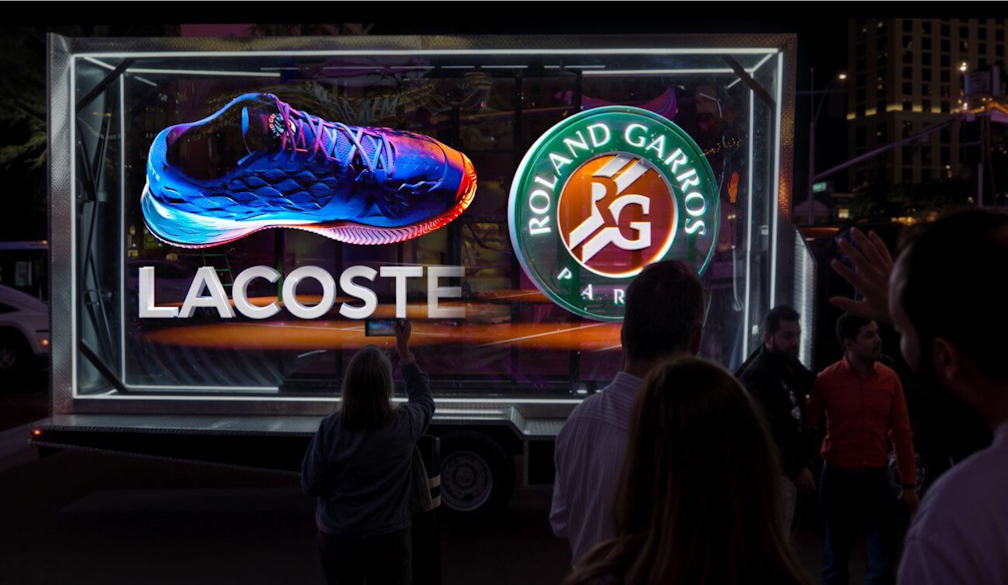
Holographic displays have moved from novelty to high-impact launch infrastructure. In 2026, they are increasingly used for unveiling products, introducing brand ambassadors, and creating focal points at events and flagship locations.
Unlike traditional screens, holograms present true 3D visuals visible without headsets, making them ideal for public and high-traffic environments.
Why Brands Use Holograms
- Immediate attention capture and high dwell time
- Strong differentiation from standard digital signage
- Natural fit for premium, innovative brand positioning
- High shareability across social platforms
AI enhances holographic launches by optimizing motion design, adapting content to venue conditions, and enabling rapid iteration without physical reinstallation.
Companies such as Hypervsn are increasingly referenced in launch strategies where brands need to own the visual moment, not just occupy space.
2. Large-Scale LED Walls with Intelligent Content Control
LED walls remain a cornerstone of major launches, but their role has evolved. In 2026, the value lies not in size alone, but in AI-driven content orchestration.
Modern Capabilities
- Real-time content switching based on crowd flow
- Synchronization across multiple screens and locations
- Adaptive brightness and color optimization
- Integration with live data or event triggers
For large venues, exhibitions, and outdoor activations, LED walls offer scale and flexibility. AI systems ensure that visuals remain relevant and effective throughout the activation, rather than static loops.
Where They Excel
- Stadium and arena launches
- Trade shows and expos
- Large-format retail and pop-ups
3. Augmented Reality for Interactive Product Discovery
Augmented Reality continues to play a strong supporting role in launches, particularly for products that benefit from exploration or customization.
In 2026, AR activations are increasingly:
- Embedded into launch environments via QR or web-based AR
- Used for product configuration and feature breakdowns
- Combined with physical displays for hybrid experiences
AI-driven personalization allows AR content to adapt based on user interaction patterns, improving relevance without requiring personal data storage.
Best Use Cases
- Consumer electronics and wearables
- Automotive and mobility launches
- Furniture and lifestyle products
AR is most effective when it complements a central visual anchor, such as a physical display or holographic reveal.
4. Immersive Projection Mapping
Projection mapping remains a powerful storytelling tool, especially for architectural or urban activations. AI has improved its precision and adaptability.
Key Advantages
- Transforms buildings and environments into brand assets
- Strong alignment with cultural and city-scale launches
- Flexible content updates without structural changes
AI tools assist with surface detection, perspective correction, and timing optimization, reducing setup complexity and improving reliability.
Limitations
- Dependent on lighting conditions
- Less effective in crowded or fast-moving environments
5. Comparing Visual Technologies for Launch Impact
|
Technology |
Best For |
Key Strength |
Main Limitation |
|
Holographic Displays |
Premium launches, brand icons |
3D presence & attention |
Content complexity |
|
LED Walls |
Large-scale visibility |
Scale & flexibility |
Visual saturation |
|
Augmented Reality |
Product interaction |
Personalization |
Device dependency |
|
Projection Mapping |
Architectural storytelling |
Environment transformation |
Setup constraints |
Leading brands increasingly combine two or more technologies, using AI to orchestrate them into a unified experience rather than isolated visual moments.
Measuring Success: From Impressions to Engagement
A defining shift in 2026 is how launch success is measured. Visual technologies now integrate with analytics systems to track:
- Dwell time and engagement duration
- Interaction hotspots
- Content performance variations
- Social amplification indicators
This data-driven approach allows brands to justify investment not only in terms of visibility, but in measurable brand impact.
Conclusion: Visual Technology as a Strategic Launch Asset
In 2026, visual technologies are no longer decorative elements of product launches — they are strategic assets. AI-powered holograms, smart LED systems, AR layers, and immersive projections give brands the ability to create launches that are immersive, adaptive, and memorable.
The most successful activations are those that treat visual experience as part of the product narrative itself — not an afterthought, but a core expression of brand value.
As competition for attention intensifies, brands that invest in intelligent, experience-driven launch technologies will be the ones that are seen, remembered, and shared.


 Business Daily Media