Sustainable Spirits: How the Drinks Industry Is Raising the Bar on Green Innovation
The global spirits industry is undergoing a quiet revolution. What was once a market defined purely by heritage, taste and tradition is now increasingly being reshaped by another force: sustainability. From independent distilleries to multinational beverage groups, producers are realising that greener operations are not just a moral imperative, but a business advantage.
Sustainability as Strategy
For years, sustainability was seen as a side project, an ethical box to tick. Today, it is a growth driver. Consumers are increasingly aligning their purchases with their values, favouring brands that demonstrate environmental and social responsibility. According to IWSR, the global premium-and-above segment (excluding national spirits) grew by 3% in 2024, signalling that “less but better” is becoming a genuine choice rather than a niche trend. (Food & Drink Business)
This shift has turned sustainability from a marketing tagline into a strategic necessity. Distilleries that once focused purely on production efficiency are now redesigning entire operations, from sourcing and packaging to logistics, to reduce their environmental footprint.
Rethinking the Distillery
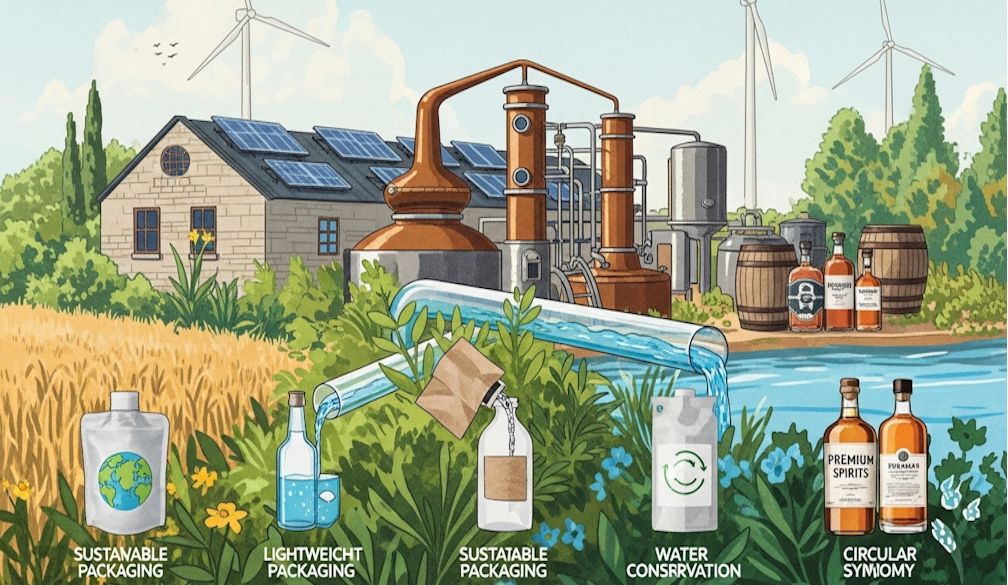
Distillation has traditionally been energy intensive, requiring large amounts of heat and water. In response, forward-thinking producers are investing in renewable energy, closed-loop water systems and carbon offsetting to minimise waste. Multinational players are already publicising these changes. (The IWSR)
Smaller craft brands are also innovating. Some UK-based distillers have shifted toward lighter packaging and local ingredient sourcing to cut emissions. Others are experimenting with circular economy models, reusing spent botanicals, offering refillable packaging systems and championing local sourcing as part of their brand narrative.
Local Roots, Global Responsibility
Sustainability is not only about reducing carbon output; it is about building resilient, community-oriented businesses. Many distilleries are returning to local sourcing, using regional ingredients that celebrate provenance while cutting transport emissions.
Heritage distillers such as Bullards Spirits are demonstrating how premium spirits can champion sustainability without compromising on craftsmanship. Based in Norfolk, Bullards has introduced eco-refill pouches and encourages customers to reuse their signature bottles, an initiative that reflects both environmental awareness and a deep respect for tradition.
By blending modern innovation with local authenticity, Bullards and other independent producers are showing that sustainability can coexist beautifully with premium quality.
Packaging: The New Frontier
One of the industry’s biggest challenges and opportunities lies in packaging. The carbon footprint of a glass bottle is substantial, and the move toward recyclable, lightweight or refillable alternatives is gaining momentum. Some large groups are trialling paper-based bottles, while others explore plant-based plastics or reusable systems.
This wave of innovation not only reduces waste but also resonates with consumers seeking meaningful engagement with the brands they choose. A refillable gin bottle, for instance, is more than a vessel; it becomes part of a long-term relationship between brand and buyer.
The Bottom Line of Going Green
Adopting sustainable practices requires investment, but it is increasingly clear that the return is tangible. Brands embracing eco-friendly operations often report stronger loyalty, improved margins and enhanced reputation among younger, environmentally aware demographics. Sustainability also drives efficiency: renewable energy reduces long-term costs, waste minimisation lowers disposal expenses, and local sourcing shortens supply chains. The result is not just a greener operation but a smarter, more resilient business model.
A Responsible Future for Spirits
The spirits industry has always been about balance, art and science, tradition and innovation. Today, that balance extends to sustainability and profitability. The brands that succeed will be those that understand the power of aligning purpose with performance. Whether through renewable energy, sustainable packaging or responsible sourcing, the movement toward greener distilling is reshaping the very definition of premium. And as producers like Bullards prove, the true spirit of the future is one that values the planet as much as the product.


 Business Daily Media