International aid groups are dealing with the pain of slashed USAID funding by cutting staff, localizing and coordinating better
- Written by: Sarah Stroup, Professor of Political Science, Middlebury College
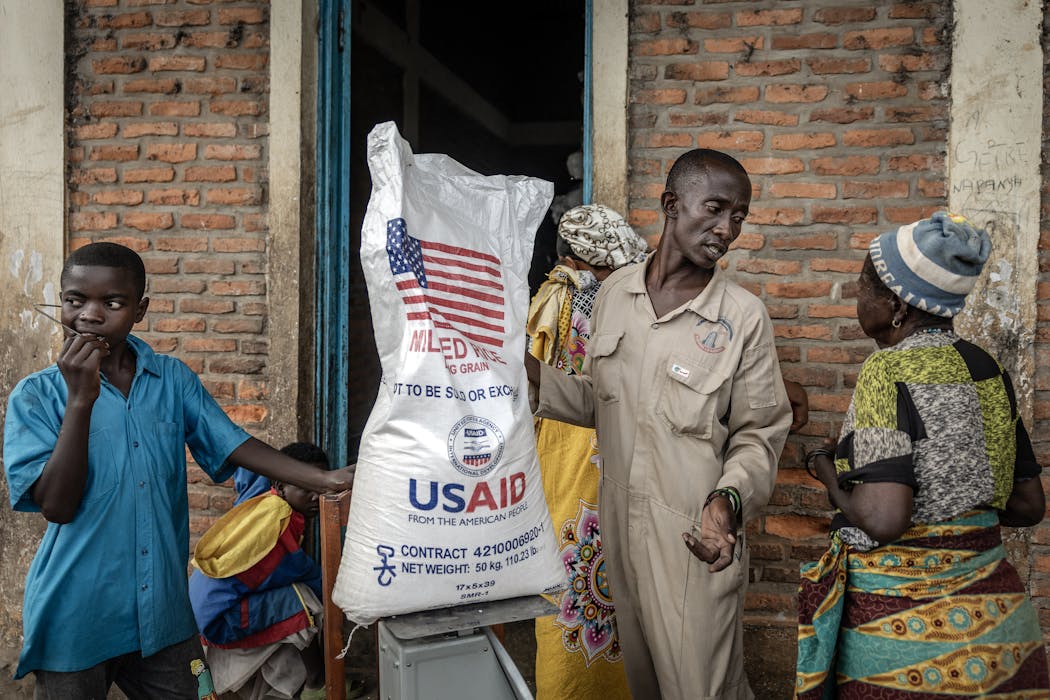
Since Jan. 20, 2025[1], the first day of his second term in office, President Donald Trump has slashed U.S. foreign aid spending. It began with a stop-work order[2] that paused spending on everything from treating tropical diseases[3] in Mali to providing nutrition support[4] in Nepal.
By early February 2025, billionaire Elon Musk announced that the U.S. Agency for International Development, the lead foreign aid agency, had been fed “into the wood chipper[5].” By July 1, USAID had ceased to exist, 83% of its programs had been canceled[6], and remaining aid programs were moved into the State Department[7] – where it was unclear how they would be managed. Congress clawed back billions[8] in previously approved aid spending, at Trump’s request, in July.
These developments rattled nongovernmental organizations around the world because about half of USAID’s funding[9] was channeled through nongovernmental organizations prior to this upheaval. According to Tom Hart[10], who heads a coalition of U.S.-based NGOs, “We’re in a pivot moment, a massive transition, and things aren’t clear.”
Favoring government-to-government spending
According to the official foreignassistance.gov[11] website, the U.S. spent US$32 billion on foreign aid in 2025, less than half of the $68 billion it spent in 2024. These figures include all of USAID’s budget.
The Trump administration is seeking to continue these cuts in its proposed budget for 2026. For example, its proposed $3.8 billion global health budget would mark a 60% decrease from actual 2025 spending[12].
But the budget the House of Representatives passed[13] in January 2026 would spend $50 billion[14] on international diplomacy and foreign aid, including $9.4 billion for global health and $5.5 billion for humanitarian aid.
The Trump administration has shown a clear preference for distributing U.S. foreign aid to other governments[15]. That means most future aid is likely to be channeled bilaterally rather than contracted out[16] through NGOs or private companies.
We, two[17] scholars[18] of international NGOs, have observed several strategies they are following to keep operating and meeting their missions.
Two former USAID employees explain how they have sought to maintain some of the services the programs they used to run provided.Struggling to adapt
The first is simply scaling back.
Save the Children US had one-third of its funding frozen[19], restricting the humanitarian, health and education support it provides to kids in over 100 countries.
Eighty percent of Freedom House’s activities to promote human rights and democracy[20], which include everything from supporting judicial integrity in Moldova to enhancing media reporting on human rights in Uganda, were terminated.
World Vision, the world’s largest evangelical humanitarian organization, lost 10% of its budget[21], laid off as many as 3,000 employees and cut programs engaged in HIV/AIDS prevention and child health care and malnutrition in countries like Bangladesh, Kenya and Rwanda.
Search for Common Ground lost $23 million overnight[22] – a 40% cut to its conflict resolution and peacebuilding efforts around the world.
Shifting from shocked to strategic
Once nongovernmental organizations overcame their initial shock, their leadership teams began to respond to USAID’s demise. Three strategies have emerged: reducing operations to focus on activities that support core missions, searching for new sources of reliable funding, and transforming the size and scope of their organizations.
Regardless how they’ve responded, NGOs have had to scale back. As of April 2025[23], 81 NGOs had closed at least one office. This includes streamlining activities, laying off staff, encouraging their early retirement and cutting pay.
These changes have allowed most NGOs to continue at least minimal operations. But doing more with less may simply not be sustainable for an exhausted workforce over the long term.
Tapping philanthropy and social enterprises
Philanthropy may fill some gaps. However, foundations and individual donors are also facing economic and political uncertainty[24]. Charitable giving to international affairs has been on the rise[25], but the $35 billion in giving to international causes in 2024 would have to more than double to make up for the reduction in government spending.
Social entrepreneurship combines for-profit models with the mission orientation of nonprofits, and this approach, used by the Bangladesh Rural Advancement Committee[26] and others, is often mentioned as a model for NGOs seeking to provide local services.
But building social enterprises[27] takes time. And there do not seem to be any quick fixes that might restore funding for international NGOs to pre-2025 levels.
PBS NewsHour and the Pulitzer Center reported in 2025 on the impacts of USAID cuts in Africa.Envisioning new models
The Trump administration has asserted that NGOs had become too dependent on government aid. Secretary of State Marco Rubio[28], whom Trump named USAID’s acting administrator until the agency was shuttered, has derided this relationship as the “NGO industrial complex[29].”
While scholars tend to be less dismissive, they have long highlighted that depending on powerful donors[30], including governments, can limit innovation and distract organizations from their missions.
USAID’s dissolution has expedited experts’ re-envisioning of the NGO model – the idea of private charitable organizations based in rich nations providing services in poor countries.
One push has been to move decision-making and resources to residents of the communities where NGOs are delivering goods and services, through a process development experts call “localization[31].”
For example, U.K.-based Christian Aid announced in April 2025 that it would close its own offices[32] and instead work with established partner organizations in the countries where it works.
It has halved its staff [33] in a year when revenues dropped by 14%[34] due to the Trump administration’s slashing of its contributions to the U.N. World Food Program[35].
Losing so much funding has also made cooperation more necessary.
As a book that one of us (Hadden) wrote with University of Pennsylvania professor Sarah Bush shows, the NGO field had become more crowded and competitive[36] since the mid-2010s.
Janti Soeripto, Save the Children’s chief executive officer, has said that in 2025 her organization began cooperating more extensively[37] with MercyCorps and CARE to increase their collective “surge capacity,” or ability to respond to disasters in a quick, effective and efficient manner.
Some NGOs have also reportedly begun discussions about mergers[38] to streamline costs and maintain valuable programs. Although mergers can be challenging when organizations have different values or workplace cultures, we believe that there will be fewer international NGOs in the years ahead.
Moving toward an uncertain future
A leaner, more financially diversified, more localized and better coordinated[39] NGO sector could have positive consequences in the long run.
But we’re certain that the transition will be rocky[40], both for the people who benefit from the work of NGOs and for the experts and staff members who have built their careers around global poverty alleviation and improving public health in low-income countries.
Funding cuts shuttered many long-standing development and humanitarian programs, with devastating consequences[41]. According to expert estimates[42], the dismantling of USAID could result in more than 14 million deaths by 2030, including over 4 million children under 5 years old in countries like Uganda, the Democratic Republic of Congo and Colombia.
The Trump administration’s new foreign aid plan cuts out NGOs to fund local governments, but those partner governments may not be able[43] or willing to spend aid money better than their NGO counterparts.
It’s now up to NGO leaders to chart a new course.
According to Essi Lindstedt, a climate and development adviser[44], there is “a lot of agreement that the ‘old aid’ wasn’t right,” but we have “not yet seen a transition into something better.”
References
- ^ Since Jan. 20, 2025 (www.whitehouse.gov)
- ^ stop-work order (www.kff.org)
- ^ treating tropical diseases (www.npr.org)
- ^ nutrition support (www.devex.com)
- ^ into the wood chipper (www.nytimes.com)
- ^ 83% of its programs had been canceled (x.com)
- ^ moved into the State Department (www.npr.org)
- ^ clawed back billions (www.npr.org)
- ^ about half of USAID’s funding (www.congress.gov)
- ^ According to Tom Hart (www.linkedin.com)
- ^ foreignassistance.gov (foreignassistance.gov)
- ^ 60% decrease from actual 2025 spending (www.congress.gov)
- ^ budget the House of Representatives passed (case.house.gov)
- ^ would spend $50 billion (www.devex.com)
- ^ distributing U.S. foreign aid to other governments (www.cgdev.org)
- ^ rather than contracted out (www.congress.gov)
- ^ We, two (scholar.google.com)
- ^ scholars (scholar.google.com)
- ^ one-third of its funding frozen (hbr.org)
- ^ promote human rights and democracy (freedomhouse.org)
- ^ lost 10% of its budget (www.christianitytoday.com)
- ^ lost $23 million overnight (www.sfcg.org)
- ^ As of April 2025 (www.devex.com)
- ^ also facing economic and political uncertainty (www.forbes.com)
- ^ has been on the rise (givingusa.org)
- ^ Bangladesh Rural Advancement Committee (www.bracusa.org)
- ^ building social enterprises (www2.fundsforngos.org)
- ^ Secretary of State Marco Rubio (www.state.gov)
- ^ NGO industrial complex (statedept.substack.com)
- ^ depending on powerful donors (academic.oup.com)
- ^ localization (civil-protection-humanitarian-aid.ec.europa.eu)
- ^ its own offices (www.christianaid.org.uk)
- ^ halved its staff (www.christianpost.com)
- ^ dropped by 14% (www.civilsociety.co.uk)
- ^ U.N. World Food Program (www.wfp.org)
- ^ become more crowded and competitive (www.cambridge.org)
- ^ cooperating more extensively (www.devex.com)
- ^ begun discussions about mergers (www.devex.com)
- ^ better coordinated (www.cambridge.org)
- ^ the transition will be rocky (odi.org)
- ^ devastating consequences (www.impactcounter.com)
- ^ expert estimates (doi.org)
- ^ may not be able (foreignpolicy.com)
- ^ climate and development adviser (www.linkedin.com)